What Types of Bedding Do Chain Stores Buy?
Chain stores buy bedding to serve different shoppers, price points, seasons, and store formats. Their assortments commonly include sheet sets, pillowcases, comforters, duvets, blankets, mattress protectors, and decorative pillows. The mix matters. A crisp cotton sheet set may suit a premium department, while easy-care microfiber can meet demand for lower-priced everyday basics. Retail teams also consider package size, color consistency, replenishment speed, and whether products fit standard shelf displays.
Industry reports help explain why buyers review these choices closely. Grand View Research’s Home Bedding Market report tracks product categories, materials, distribution channels, and regional demand, offering a useful framework for assessing assortment decisions. The U.S. Bureau of Labor Statistics’ Consumer Expenditure data can add context on household spending, though it does not isolate chain-store bedding purchases. That distinction matters. Broad market growth should not be treated as proof that every bedding type will sell equally well in every store.
For a Chain Store Supplier Bedding partner, the practical challenge is balancing dependable volume with enough variety to keep shelves relevant. Buyers may request durable stitching, clear care labels, coordinated colors, and packaging that shows fabric details at a glance. Still, a polished sample does not guarantee strong sales. Local climate, store placement, customer budgets, and changing preferences all influence results. This guide examines the bedding types chain stores commonly source, the features they compare, and the details suppliers should confirm before presenting an assortment. The answer is not always neat. It deserves a second look.
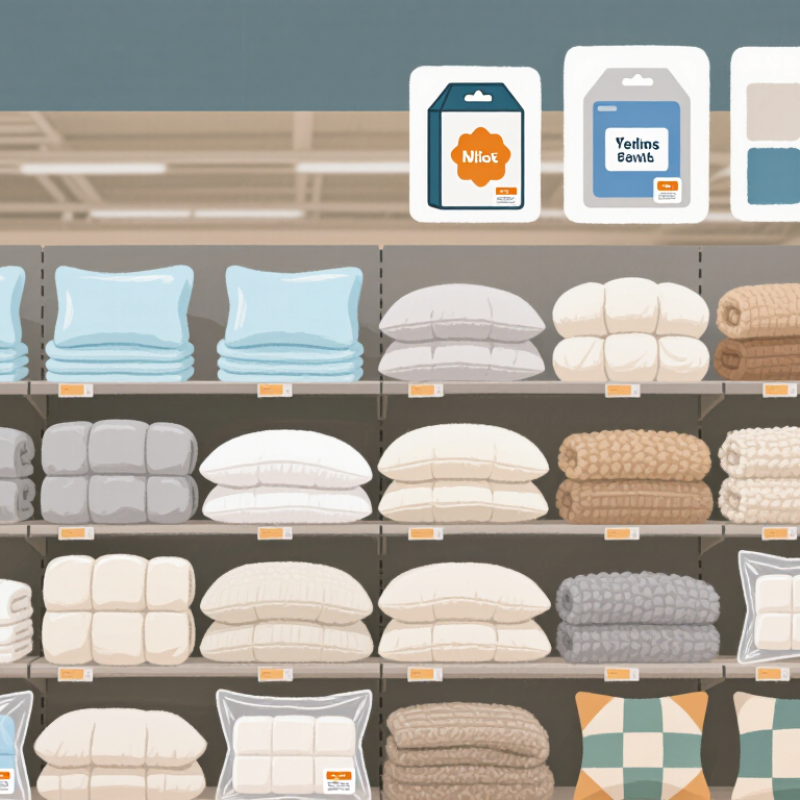
Core Bedding Categories: Sheets, Comforters, Duvet Covers, Pillows, and Protectors
Chain stores usually buy bedding in coordinated categories, but each item must also work on its own. Sheets are a frequent starting point. Buyers compare fabric feel, weave, size accuracy, colorfastness, and care requirements. A crisp cotton sheet may suit warm rooms, while a brushed fabric can feel softer in colder seasons. Clear sizing matters: a fitted sheet that slips from a deep mattress can quickly generate complaints. Comforters add warmth and visual weight. Their fill, stitching, and loft affect both comfort and shelf appeal. Duvet covers offer a flexible way to refresh a bed’s look without replacing the insert. They should be easy to wash and simple to fasten.
Pillows need careful selection because support preferences vary widely. A store may carry several firmness levels and clearly explain their intended feel. Protectors are less visible, but they help shield mattresses and pillows from moisture, dust, and everyday wear. Buyers should check breathability, noise, fit, and laundering instructions rather than relying on claims alone. Small details count.
Tips: Request samples and wash them before approving a large order. Check seams, shrinkage, color changes, and packaging after laundering. Compare measurements against real mattresses, not just product labels. One lesson can be easy to miss: attractive bedding may sell well in a display, yet feel impractical at home. Store teams can track returns and customer questions to spot gaps in the range. Preferences differ by region and season, so a balanced assortment is often safer than betting heavily on one fabric or style. It is not a perfect formula; sales data still needs context.
The chart highlights five core bedding categories commonly found in retail assortments. Values are illustrative category markers, not sales or purchasing data.
Mattress Size Assortments: U.S. Twin, Full, Queen, and King Dimensions
For chain-store bedding assortments, mattress dimensions are a practical starting point: they shape sheet fit, bed-frame compatibility, and shelf space. The International Sleep Products Association lists common U.S. mattress sizes as Twin, 38 by 75 inches; Full, 54 by 75; Queen, 60 by 80; and King, 76 by 80. These measurements help buyers compare products consistently, but labels alone do not guarantee a precise fit. Thickness and construction can vary, and deep mattresses may need pocket sheets with extra depth.
Queen and King sizes are longer than Twin and Full, so shoppers often compare them for shared sleeping space. A Queen adds width and five inches of length over a Full. A King offers 16 inches more width than a Queen, with the same length. That difference matters in a narrow bedroom: measure the room, doorways, and bed frame before setting an assortment. Retailers should also check supplier specifications, since listed dimensions may allow small manufacturing tolerances. A few inches can matter.
Tips: Keep a tape measure nearby. Match sheet-pocket depth to mattress thickness, then confirm the frame’s usable dimensions. Leave room for bedside access. It is easy to overlook that.
Sheet Specifications: Weave, Fiber Content, and Thread-Count Ranges
Chain stores usually specify sheets by weave, fiber content, and measurable construction details. Percale feels crisp and matte; sateen has a smoother surface and a subtle sheen. For core assortments, buyers often compare both against durability, laundering performance, and target price. Cotton remains a familiar choice, while polyester and blends can improve wrinkle resistance and reduce drying time. Textile Exchange’s Materials Market Report 2024 estimates that global fiber production reached 124 million tonnes in 2023, with polyester accounting for about 57%. That scale helps explain why synthetic fibers are widely available, though availability alone does not make a sheet comfortable.
Thread-count ranges need careful interpretation. Many everyday programs use roughly 180–300 threads per inch, while premium lines may specify 300–500. Higher numbers are not automatically better: yarn thickness, fiber quality, and finishing also shape softness and lifespan. Buyers should confirm the test method and whether the stated count includes plied yarns. ASTM D3775 provides a standard method for determining woven-fabric warp and filling thread counts, supporting more consistent supplier comparisons. Still, test results cannot replace handling a washed sample.
Tips: Request a laundered swatch, then check pilling, shrinkage, seam strength, and feel under store lighting. Compare specifications on the same basis. A 400-count claim can sound impressive, but it may hide a coarse hand or heavy finish. We sometimes overvalue the number. It deserves a second look.
Product Safety and Claims: FTC Textile Labels and OEKO-TEX STANDARD 100
For chain-store bedding, product safety begins with clear, verifiable information. In the United States, textile labels generally identify fiber content, country of origin, and the responsible business. Care instructions are covered by separate requirements. Buyers should check that sewn-in labels, packaging, and product records agree. A mismatch on a sample can become a costly problem across thousands of units. Small details matter.
OEKO-TEX STANDARD 100 indicates that tested textile components were assessed for specified harmful substances under the program’s criteria. It is useful evidence, but it does not mean a sheet is organic, environmentally harmless, or risk-free in every situation. Buyers should verify the certificate’s validity and scope, including whether it covers the finished bedding or only selected materials. Pillowcases, thread, trims, and prints can be overlooked. They shouldn’t be.
Marketing claims need the same care as labels. Words such as “non-toxic” or “chemical-free” can imply more than test results support. Keep claim wording specific, retain supplier documents, and confirm that evidence matches the exact product being sold. I have seen teams focus heavily on fabric certificates while missing a changed dye lot. That gap is easy to underestimate.
Organic Bedding Criteria: GOTS Requires at Least 70% Organic Fibers for “Made With Organic”
Chain-store bedding buyers often compare fiber content, traceability, and repeatable supply before approving sheets or duvet covers. For products labeled “made with organic,” the Global Organic Textile Standard (GOTS) requires at least 70% certified organic fibers. The remaining fiber content must meet the standard’s restrictions, and processing sites must follow its certification requirements. This is a threshold, not a claim that every component is organic.
Check the certificate and product scope, not just a hangtag. A fitted sheet might contain 70% organic cotton and 30% other permitted fibers; its exact composition should be clear in purchasing records. GOTS also sets a higher 95% minimum for products labeled “organic,” according to its standard. That distinction matters on crowded shelves. Textile Exchange’s Organic Cotton Market Report 2021–22 estimated global organic cotton production at 342,265 metric tonnes, or about 1.4% of global cotton production. Supply is growing, but availability can still vary by fiber and season. Procurement teams should verify current certificates and lot documentation. Small details matter. A percentage alone cannot prove responsible farming or consistent fabric performance, and buyers may need to ask better questions than the label answers.

 Catalog
 Replacement Cushions
 New Jersey Catalog