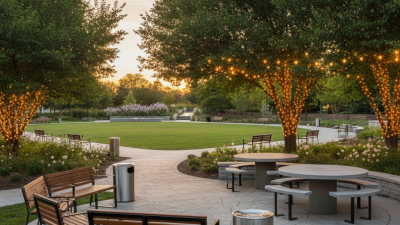

10 Best Site Furniture Suppliers for Global Buyers?
Choosing among the 10 Best Site Furniture Suppliers for Global Buyers requires more than comparing product photos and advertised prices. Site Furniture must perform outdoors, where rain, sunlight, vandalism, heavy use, and uneven ground can expose weak design. A dependable supplier should provide clear material specifications, installation guidance, warranty terms, and evidence of quality testing. Details matter.
This guide examines suppliers through practical criteria, including product range, manufacturing experience, customization, international shipping, and after-sales support. Benches, litter bins, bollards, bike racks, planters, and picnic tables should suit the project’s climate and public environment. Galvanized steel may suit coastal locations, while recycled plastic can reduce maintenance in wet areas. That sounds simple. It rarely is.
Global buyers should also review anchoring methods, pallet dimensions, lead times, replacement parts, and documentation for local procurement requirements. Supplier claims deserve verification through project references, technical drawings, product samples, and consistent communication. A polished website is not proof of dependable delivery. Neither is the lowest quotation.
The ranking is intended as a practical starting point, not a universal verdict. Supplier capabilities, pricing, certifications, and shipping conditions can change over time. Some companies may excel in custom urban projects but struggle with small orders. Others may offer strong catalog value but limited installation support. Careful buyers should confirm current information directly before signing a contract. That extra step may prevent costly replacements, delayed openings, or furniture that looks suitable but fails in daily use.
What Site Furniture Includes and Why It Matters for Public Spaces
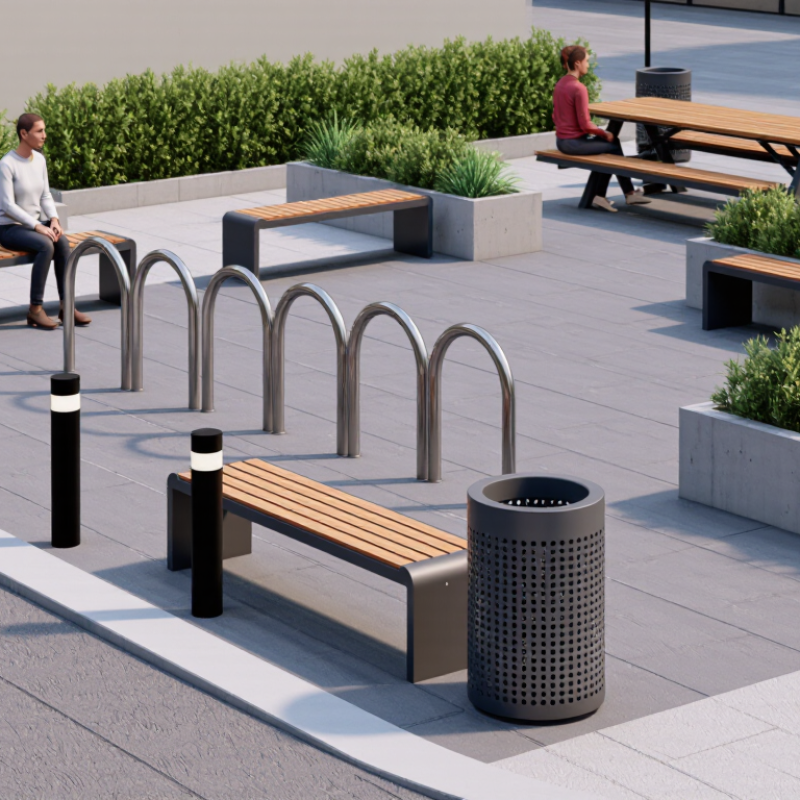
Site furniture is more than decoration around a building. It includes benches, picnic tables, litter bins, bicycle racks, bollards, planters, ash receptacles, shelters, and wayfinding elements. Each item affects movement, comfort, safety, and maintenance.
The need is growing with urbanisation. The United Nations World Urbanization Prospects projects that 68% of the global population will live in urban areas by 2050.
Public spaces must therefore serve more people within limited footprints. The World Health Organization’s Global Status Report on Physical Activity 2022 found that 31% of adults worldwide do not meet recommended activity levels.
A shaded bench near a walking route may support rest, social contact, and longer outdoor use. Small details matter.
Global buyers should inspect materials, drainage, anchoring, accessibility, and replacement parts. Stainless steel may suit coastal areas, while powder-coated steel needs careful surface preparation. Recycled plastic can reduce repainting, but its heat performance requires checking.
The World Bank’s What a Waste 2.0 report estimates municipal waste could reach 3.40 billion tonnes annually by 2050. Practical bin capacity and collection access are essential.
Yet furniture selection is rarely perfect. A visually attractive bench can become uncomfortable under direct sun. A strong bollard can obstruct wheelchair movement. Supplier comparisons should include local climate data, installation experience, warranty terms, and maintenance records—not only catalogue photos or price.
Key Criteria for Evaluating Global Site Furniture Suppliers
Evaluating a global site furniture supplier requires more than comparing catalog prices. Inspect welded joints, surface drainage, edge safety, and anchoring details. A bench may look strong indoors, yet fail after repeated rain, heat, and freezing cycles. Ask for material specifications, accelerated weathering results, load tests, and maintenance instructions. Request a production sample before approving a large order. Test it outdoors.
Logistics deserves equal attention. UNCTAD’s Review of Maritime Transport reports that over 80% of world merchandise trade by volume moves by sea. Therefore, suppliers should explain packaging strength, container utilization, port options, lead times, and damage procedures. The World Bank’s 2023 Logistics Performance Index evaluates customs, infrastructure, tracking, and timeliness. These measures help buyers compare delivery capability, but they cannot replace shipment records or customer references. Data can be incomplete.
Quality systems also need careful interpretation. The ISO Survey reports more than one million ISO 9001 certificates worldwide, showing how common formal quality management has become. Certification supports process control, but it does not prove that every outdoor product will perform well. Review inspection plans, batch traceability, corrective-action records, and replacement policies. Environmental evidence matters too: request recycled-content data, repair guidance, and end-of-life material information. A polished sustainability statement is not enough. Suppliers should provide verifiable documents, although even well-prepared buyers can overlook local climate conditions, installation errors, or public misuse.
10 Best Site Furniture Suppliers for Global Buyers? - Key Criteria for Evaluating Global Site Furniture Suppliers
| No. | Supplier Profile | Best-Fit Products | Common Materials | Typical MOQ | Typical Production Lead Time | Global-Buyer Documentation | Customization Potential | Typical Warranty | Best Use Case | Evaluation Priority |
|---|---|---|---|---|---|---|---|---|---|---|
| 1 | Metal Fabrication Specialist | Benches, litter bins, bollards, bike racks and planters | Galvanized steel, stainless steel, powder-coated steel | 10–50 units | 30–60 days | Commercial invoice, packing list, material data, coating specification, test reports where applicable | High | 2–5 years | Urban streets and transport areas | Corrosion protection |
| 2 | Recycled-Plastic Furniture Specialist | Outdoor benches, picnic tables, decking elements and bins | Post-consumer recycled HDPE, recycled PP, recycled composites | 20–100 units | 25–55 days | Recycled-content declaration, composition data, packing list, origin documents | Medium | 3–10 years | Low-maintenance public spaces | UV and moisture resistance |
| 3 | Timber and Wood-Composite Specialist | Benches, tables, shelters, screens and boardwalk furniture | Tropical hardwood, thermally modified wood, wood-plastic composite | 10–40 units | 35–70 days | Timber species declaration, treatment details, moisture data, origin and packing documents | High | 2–5 years | Parks, campuses and resort landscapes | Moisture management |
| 4 | Cast-Concrete and Stone Specialist | Seating blocks, planters, tables, bollards and landscape elements | Reinforced concrete, terrazzo, natural stone and fiber-reinforced concrete | 5–25 units | 45–90 days | Mix design, compressive-strength data, weight details, installation drawings | Medium | 3–10 years | Permanent civic and landscape projects | Structural strength |
| 5 | Modular Street-Furniture Specialist | Modular seating, tables, planter systems and integrated charging units | Steel or aluminum frames, timber slats, recycled plastic and composites | 10–30 units | 35–75 days | Assembly drawings, load data, electrical documentation when relevant, spare-parts list | Very high | 2–5 years | Mixed-use developments and public plazas | System compatibility |
| 6 | Transit and Infrastructure Furniture Specialist | Shelters, platform seating, barriers, bollards and wayfinding supports | Galvanized steel, stainless steel, aluminum, laminated glass and polycarbonate | 5–20 units | 60–120 days | Structural calculations, wind-load data, installation manuals, material certificates | High | 3–10 years | Airports, rail stations and bus corridors | Safety compliance |
| 7 | Outdoor Hospitality Furniture Specialist | Café tables, chairs, loungers, umbrellas and hospitality planters | Aluminum, treated steel, synthetic rattan, compact laminate and outdoor fabrics | 25–100 units | 30–75 days | Fabric specifications, fire-performance documents where required, care instructions | High | 1–3 years | Hotels, restaurants and outdoor venues | Comfort and finish quality |
| 8 | Playground and Recreation Furniture Specialist | Picnic tables, bleachers, changing benches and recreation accessories | Powder-coated steel, aluminum, hardwood, recycled plastic and rubber components | 10–50 units | 40–90 days | Safety data, impact information, installation instructions, maintenance schedule | Medium | 2–5 years | Schools, parks and community facilities | User safety |
| 9 | Sustainable and Circular-Design Specialist | Repairable benches, demountable tables, refill stations and recycling units | Recycled metals, recycled polymers, certified timber and modular fasteners | 10–50 units | 35–80 days | Environmental product data, recycled-content evidence, repair and end-of-life guidance | High | 3–10 years | Green-building and ESG-led projects | Traceability |
| 10 | Project-Based Custom Manufacturer | Architectural benches, bespoke shelters, signature planters and coordinated packages | Mixed materials selected according to design, climate and budget | 1–20 units | 60–150 days | Shop drawings, samples, bills of materials, installation details and project-specific test records | Very high | 2–5 years | Landmark developments and design-led projects | Design execution |
Ten Leading Site Furniture Suppliers and Their Product Strengths
Global buyers often compare ten leading site furniture suppliers by product strength, not by catalog size alone. One excels in powder-coated steel benches for heavy public use. Another specializes in recycled plastic seating that resists moisture and insects. A third supplies modular picnic tables with replaceable slats. One focuses on cast-aluminum tables with lighter installation demands. Another develops concrete furniture for permanent, vandal-resistant settings. A specialist in bicycle racks offers tested anchoring systems and clear spacing guidance. One supplier is known for weatherproof litter bins with removable liners. Another provides shade structures with fabric options for different climates. A playground-adjacent supplier produces soft-edged seating for family areas. The tenth combines wayfinding signs, bollards, and coordinated finishes for complete site planning.
In practical purchasing, material documentation matters as much as appearance. I would request coating specifications, load data, corrosion testing, spare-part policies, and installation drawings before approval. Samples can reveal rough welds, unstable feet, or colors that differ from photographs. Small details matter. Suppliers with regional warehouses may reduce delays, while experienced exporters usually prepare stronger packing and customs documents. However, delivery promises still need verification. A supplier may offer excellent furniture but weak after-sales support. That weakness can become expensive when one damaged bench needs a custom part. Buyers should also check accessibility clearances, drainage design, and maintenance instructions for the target climate. Some suppliers claim low-maintenance performance, yet their products still need regular cleaning. I have found that honest specifications are more useful than impressive promises. The strongest supplier is not always the cheapest or most stylish; it is the one whose products, documents, and service remain dependable after installation.
Site Furniture Product Strengths for Global Buyers
Indicative service-life ranges for common site-furniture materials used in public-realm, transport, education, hospitality, and commercial projects. Actual performance depends on specification, climate, installation, maintenance, and warranty conditions.
Recycled HDPE and stainless steel generally provide strong long-term durability, while galvanized steel, aluminum, and hardwood offer different balances of cost, weight, appearance, and maintenance requirements.
Comparing Materials, Customization, Certifications, and Pricing
Selecting among the 10 best site furniture suppliers requires more than comparing catalog prices. Aluminum resists rust and reduces weight, while galvanized steel often provides stronger impact resistance. Recycled HDPE suits coastal parks because it will not splinter or absorb water. Certified timber adds warmth, but buyers must verify legal sourcing and treatment records.
The 2024 Circularity Gap Report found that only 7.2% of global material use was circular. Recycled content claims therefore need evidence, not attractive wording.
Customization should cover dimensions, colors, anchoring, drainage, logos, and replacement parts. Ask for production drawings before approving a large order.
Useful credentials include ISO 9001 for quality systems and ISO 14001 for environmental management. Product testing should match the installation market, such as EN 581 for outdoor seating or relevant ASTM requirements. A certificate alone is insufficient. Check its scope, expiry date, laboratory, and model number. Small details matter.
Pricing comparisons should include tooling, packaging, freight, duties, installation, and future maintenance. A cheap steel bench may become expensive after repeated repainting. Supplier quotations should separate material grade, coating thickness, hardware, and warranty terms.
Industry market studies continue to report steady growth in outdoor furniture demand, but their forecasts vary by region and product definition. That uncertainty deserves caution. I would request three comparable samples, although samples still cannot fully predict field performance. Real sites are harsher. Wind, vandalism, salt, and careless installation can defeat a perfect specification.
How Global Buyers Can Select and Purchase the Right Supplier
Selecting among the 10 best site furniture suppliers requires more than comparing catalog prices. Global buyers should verify production capacity, material specifications, testing records, and export experience. Ask for dated factory photographs, sample dimensions, load ratings, surface treatments, and packaging details. A supplier should explain tolerances clearly. Vague answers become expensive later.
The World Bank’s 2023 Logistics Performance Index reported a median international shipment time of 44 days. That delay makes lead-time evidence essential. Request a production schedule, inspection point, container plan, and named logistics contact. The supplier should provide Incoterms, tariff codes, carton dimensions, and replacement procedures. Do not rely on one freight estimate. Port congestion changes quickly. Compare total landed cost, not the factory quote alone.
Quality evidence matters equally. The ISO Survey 2022 recorded more than 1.2 million ISO 9001 certificates worldwide, but certification alone cannot prove outdoor durability. Check independent reports for corrosion, UV exposure, stability, and drainage. Review two recent export references for similar climates. A small pilot order can reveal loose fasteners, color variation, or crushed corners. No scorecard is perfect. Leave room for communication, corrective speed, and honest disclosure of weak points. Record each finding before approving the purchase order.
Related Posts
-
How to Choose the Best Site Furniture for Your Outdoor Space
-
Ultimate Comparison of Best Site Furniture Options for Your Outdoor Spaces
-
Explore Top Site Furniture Options in China for Global Buyers?
-
5 Essential Tips for Choosing the Right Site Furniture for Your Global Projects
-
Ultimate Guide to Choosing the Best Outdoor Comfortable Furniture for Your Space
-

Elevating Home Aesthetics Globally with the Finest Quality Decor from China

Catalog
Replacement Cushions
New Jersey Catalog