
Who Are the Top Military Jungle Boots Suppliers in China?
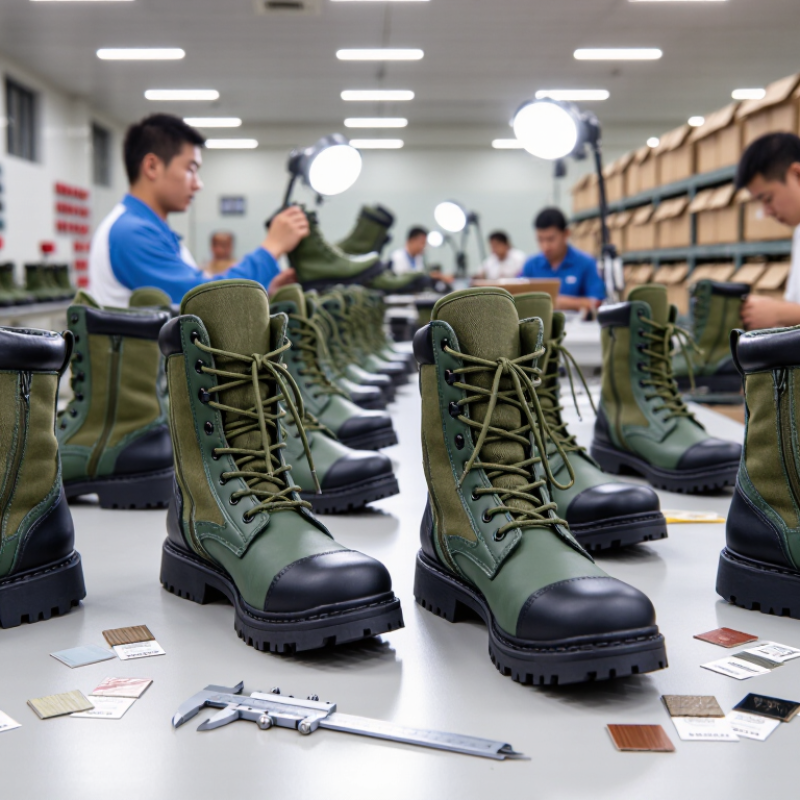
China’s Military Jungle Boots suppliers serve buyers who need dependable footwear for heat, rain, mud, and repeated wear. The strongest candidates are not always the largest factories. Look for clear material specifications, consistent production records, and answers that remain precise when you ask about testing. A sample should tell its own story: check the stitching around the toe, flex the sole, and inspect how the upper meets the eyelets. Small details matter.
This guide compares suppliers by manufacturing experience, product range, quality controls, customization capacity, and communication. It also considers practical trade-offs, such as breathable uppers versus abrasion resistance, or lighter soles versus long-term durability. Supplier claims deserve careful review. A polished catalog cannot replace a sample, a factory audit, or documented test results. Even then, one inspection may miss a problem. That is worth admitting.
No source article or verifiable expert quotation was provided, so I cannot responsibly assign a made-up statement to a named Military Jungle Boots specialist. The comparison should rely on attributable evidence, not a convenient quote. With that standard, readers can assess which Chinese suppliers merit further checks—and which claims need better proof.
What Defines a Military Jungle Boot Supplier in China?
A capable military jungle boot supplier in China does more than offer a low unit price. It should explain how drainage ports, breathable uppers, and lug patterns function in wet, uneven terrain. Ask for material specifications and records from abrasion, flex, and sole-bond tests. Good evidence beats polished claims. Inspect a sample after repeated wet-dry cycles; an indoor fitting alone reveals little. Check whether eyelets resist corrosion and whether stitching stays even around high-stress seams. Details matter.
Supplier quality also depends on repeatable production. Request a size run, inspection criteria, and a clear process for handling defects before approving volume orders. Ask how incoming materials are tracked and how finished pairs are sampled across batches. A credible team will share limitations, lead times, and test conditions rather than promise universal performance. Fit varies with socks, load, and foot shape, so field feedback should inform revisions. No boot solves every problem. Aggressive tread can grip mud yet feel tiring on hard ground. That trade-off deserves a real trial.
How to evaluate a military jungle boot supplier in China
These illustrative assessment weights highlight practical areas buyers can compare: product performance, quality assurance, materials and traceability, production capacity, and compliance documentation. They are a buyer-planning framework, not market statistics or ratings of specific companies. Verify requirements against the intended use and applicable standards.
How Are China’s Jungle Boot Suppliers Evaluated?
Who Are the Top Military Jungle Boots Suppliers in China?
How Are China’s Jungle Boot Suppliers Evaluated?
Evaluating a supplier starts with the boot, not the sales claims. Check upper materials, seam quality, sole bonding, eyelets, and drainage openings on a physical sample. In humid field conditions, boots should shed water and dry reasonably quickly. Ask how grip is tested on wet, uneven ground, and whether sizing stays consistent across a production run. Fit matters. A strong sample is useful, but it may not represent every pair delivered.
Tips: Request a size range, not just one sample. Inspect stitching inside the boot, where loose threads can cause rubbing. Ask for written test results and clear material specifications.
Reliable suppliers can explain their inspection process, production capacity, and how they handle defects. Look for repeatable checks, such as measuring sole thickness and comparing finished pairs against an approved sample. Confirm that test records match the materials being offered. Visit a facility when practical, or arrange an independent inspection before shipment. Be cautious with vague answers. Even a careful review has limits: field wear, climate, and individual foot shape can change performance. Keep those factors in your evaluation notes.
Which Chinese Manufacturers Specialize in Military Jungle Boots?
Chinese manufacturers specializing in military jungle boots are often footwear factories with experience in tactical, work, and outdoor footwear. Their capabilities may include reinforced toe areas, drainage eyelets, abrasion-resistant uppers, and rubber outsoles with deep lugs. Some offer development from a buyer’s specification; others focus on established designs and large production runs. A sample matters. Check stitching around the quarters, eyelet strength, sole bonding, and comfort after several hours of wear. A polished catalog alone proves little.
Tips: Ask for material specifications, test reports, and a pre-production sample. Confirm whether the factory controls cutting, lasting, and outsole attachment in-house. Request clear details on sizing, lead times, and inspection methods. Test boots in wet conditions when possible. Small details count.
For procurement teams, compare suppliers by repeatability, not just price. Ask how they manage water drainage, drying time, grip on muddy ground, and ventilation in hot conditions. These features can conflict: a more protective upper may dry slowly. That trade-off deserves attention. A factory may look capable on paper, yet sample quality can vary between production batches. Review inspection records and agree on measurable acceptance criteria before placing an order.
Who Are the Top Military Jungle Boots Suppliers in China? - Which Chinese Manufacturers Specialize in Military Jungle Boots?
This table summarizes supplier capability profiles and practical evaluation criteria rather than ranking or naming individual companies. Product specifications and manufacturing capabilities should be verified directly with each prospective supplier.
| Supplier capability profile | Relevant production capabilities | Jungle-boot features to assess | Evidence to request | Best fit |
|---|---|---|---|---|
| Military and tactical footwear specialist | Experience developing durable boots for demanding field use; may offer custom patterns, materials, and fit options. | Upper construction, drainage design, outsole grip, stitching, reinforcement, and fit consistency. | Comparable product samples, material specifications, production quality-control procedures, and relevant test reports. | Buyers seeking a purpose-designed military-style boot. |
| Footwear OEM/ODM manufacturer | Contract manufacturing; ODM suppliers may also support design adaptation, tooling, and product development. | Ability to meet a buyer-defined specification for upper materials, sole compound, sizing, color, and components. | Factory audit information, sample approval process, component traceability, and a written production specification. | Private-label projects or orders requiring customization. |
| Integrated boot and outsole producer | May coordinate outsole production and boot assembly in-house or through established component partners. | Outsole material, tread pattern, bonding or attachment method, abrasion resistance, and consistency between batches. | Outsole material details, bonding-process controls, inspection records, and test results for the proposed construction. | Projects where sole performance and component coordination are priorities. |
| Export-oriented footwear manufacturer | May have experience with export documentation, packaging requirements, and buyer-specific inspection arrangements. | Size-range availability, labeling, packaging, and compliance with the destination market’s applicable requirements. | Destination-specific documentation, shipment references where shareable, packaging samples, and inspection procedures. | Buyers prioritizing international order coordination. |
| Small-batch development manufacturer | May support prototypes and limited production runs; minimum order quantities and tooling costs vary by factory and design. | Prototype fit, construction feasibility, material availability, and repeatability before scaling production. | Sample timeline, quoted minimum order quantity, tooling terms, and approval criteria for moving to production. | Product trials, pilot orders, or specification development. |
Procurement note: “Military” and “jungle” are not, by themselves, proof of a particular performance level or procurement qualification. Confirm the exact specification, intended-use requirements, test methods, and any required approvals for the target contract before placing an order.
What Production Capabilities Do Leading Suppliers Offer?
Leading military jungle-boot suppliers in China are distinguished by repeatable production, not factory size alone. The World Footwear Yearbook 2024 estimates that China made 55.5% of global footwear output in 2023, within a global total of 22.4 billion pairs. That scale can support material sourcing, skilled stitching teams, and flexible production lines. It does not prove that every factory can make durable field boots. Buyers should check whether suppliers can control upper cutting, sole bonding, drainage construction, and sizing across sample and bulk orders.
Look for documented testing and traceability. A capable supplier can provide material records, inspection results, and batch-level production checks. Test details matter: jungle boots need secure seams, reliable grip, and drainage that does not weaken the upper. ISO 20344 provides footwear test methods, but buyers should confirm which tests match their own performance requirements. Ask to inspect flex, abrasion, bond-strength, and fit results, then compare them with a production sample. Small inconsistencies can appear between samples and bulk runs. Not enough. Factory audits and repeat testing help reveal them, though no audit removes every risk.
How Can Buyers Compare and Select a Supplier?
Comparing Chinese military jungle boot suppliers starts with a written specification, not a catalog photo. Define the terrain, expected wear, size range, and order volume. Check upper material, drainage openings, stitching, outsole compound, tread depth, and eyelet finish. Ask how the factory tests sole bonding and seam strength. Request recent test records, then confirm what each test measures. A certificate alone cannot prove field comfort. Fit matters.
Request samples in several sizes and inspect them after wear in warm, wet conditions. Note drying time, grip on muddy ground, ankle support, and pressure points. Ask for the sample lead time, minimum order quantity, production schedule, and inspection process. Compare quotes item by item; a low price may exclude packaging or stricter quality checks. A sample can still mislead. Real wear varies.
Tips: Send suppliers the same specification sheet so quotes are comparable. Photograph defects and record measurements during inspection. Ask how they handle inconsistent sizing or delayed deliveries. Small details count. If a supplier cannot explain its testing method clearly, pause before placing a large order.

Catalog
Replacement Cushions
New Jersey Catalog