

China Top Home Catalogs Suppliers for Global Buyers?
China has become an important sourcing base for home furnishings, décor, storage products, and household essentials. Global buyers often use Home Catalogs to compare collections before contacting manufacturers or trading companies. These catalogs may show product images, dimensions, materials, finishes, packaging options, and estimated minimum order quantities. A clear catalog can save time, but it should never replace direct supplier verification.
Reliable suppliers usually provide consistent specifications, responsive communication, and practical export experience. Buyers should request current product sheets, factory photographs, sample orders, and certification documents when relevant. They should also confirm production capacity, lead times, payment terms, packaging strength, and inspection procedures. Details matter. A polished catalog can still hide outdated prices, unavailable designs, or unclear material descriptions. That gap matters.
This guide examines China’s top Home Catalogs suppliers from a global buyer’s perspective. It focuses on evidence rather than attractive presentations alone. Supplier websites, trade records, product depth, customization services, and customer feedback can reveal useful patterns. However, rankings are never permanent. Factory capabilities change, and online information may remain incomplete. Buyers should treat this overview as a starting point, not a final purchasing decision. Direct conversations, documented samples, and independent quality checks remain essential. The strongest supplier is not always the largest one. It is often the partner that communicates clearly, meets agreed specifications, and handles problems responsibly. Mistakes can still happen. A thoughtful sourcing process helps reduce their cost and protects long-term business relationships.

What Home Catalog Suppliers Provide for Global Buyers
Global home catalog suppliers now provide more than attractive product pages. They offer structured catalogs with dimensions, materials, finishes, packaging details, and wholesale prices. This matters in a market valued at about US$766 billion in 2025, according to Statista Market Insights. Global buyers need reliable information before ordering containers, not vague lifestyle images. Strong suppliers also provide CAD files, lifestyle photos, sample options, and clearly stated minimum order quantities. Some include carton measurements and loading plans. These details reduce costly surprises during purchasing and customs preparation.
Reliable suppliers support the full buying process. They explain production capacity, lead times, payment terms, inspection procedures, and export documentation. The DHL 2024 E-Commerce Trends Report reported that delivery expectations strongly influence online purchasing decisions. That lesson applies to wholesale home products too. Buyers should ask whether the catalog reflects current stock and whether quoted prices include packaging changes. A beautiful catalog may still contain outdated data. That weakness is easy to overlook.
Tips: Request one physical sample before approving a large order. Compare the sample with catalog images under natural light. Check dimensions twice. Ask for testing reports, material declarations, and packaging photos. Review replacement policies for damaged units. A useful supplier answers directly, admits limitations, and updates errors quickly. This is not perfection, but it is a practical sign of professional reliability.
Key Product Categories in China’s Home Catalog Market
China’s Home Catalog Suppliers for Global Buyers
Key Product Categories in China’s Home Catalog Market
China’s home catalog market covers furniture, kitchenware, lighting, textiles, storage products, and household appliances. Furniture remains a major export category. UN Comtrade data show China exported approximately US$87 billion in furniture and related products under HS 94 in 2023. Category boundaries can vary, so buyers should verify customs codes carefully.
Kitchen and dining products include stainless-steel tools, cookware, organizers, and tableware. Lighting catalogs often feature ceiling fixtures, task lamps, and outdoor units. Textiles add curtains, cushions, bedding, and washable covers. These products need clear material details, size charts, packaging standards, and care instructions. Small errors matter.
Household appliances and smart-home devices are also expanding. The International Energy Agency reports that global appliance efficiency rules are becoming stricter, especially for cooling and heating equipment. Suppliers should provide energy data, testing documents, plug options, and user manuals for each market. Decorative storage sells well, but weak moisture resistance can cause returns. I have seen attractive samples fail during humid warehouse storage.
Professional buyers often request catalog filters by material, function, certification, and minimum order quantity. Trade data from the General Administration of Customs of China can support category research, but export figures do not prove product quality. That distinction is easy to miss. A reliable sourcing process combines catalog review, factory verification, sample testing, and small pilot orders before wider purchasing.
How to Evaluate China-Based Catalog Suppliers
China Top Home Catalogs Suppliers for Global Buyers?
How to Evaluate China-Based Catalog Suppliers
A polished catalog is only a starting point. Global buyers should check whether product images match real samples, factory capacity, and current specifications. Request a dated catalog with materials, dimensions, finishes, packaging details, and minimum order quantities. Vague descriptions can create expensive mistakes.
Ask for samples from the same production line used for bulk orders. I have found small differences in color, stitching, and hardware during sample reviews. Those details matter. Inspect the supplier’s quality procedures, production records, and inspection reports. A video tour helps, but an independent factory audit offers stronger evidence. Check whether the supplier can provide traceability documents and testing results required in your destination market.
References should come from comparable buyers, not only selected testimonials. Discuss communication speed, defect handling, replacement terms, and delivery accuracy. Confirm whether the catalog is updated regularly. Old photographs may hide changed materials or discontinued designs. Payment terms also deserve careful review; unusually high deposits need clear protection. No scorecard is perfect. I once rated a supplier highly because of excellent samples, then noticed weak packaging tests before shipment. That changed the evaluation.
Use a written specification sheet for every selected item. Include tolerances, labeling, carton marks, inspection standards, and approved sample photos. Keep communication factual and documented. A reliable catalog supplier should welcome reasonable questions, admit limitations, and correct errors without pressure.
China Top Home Catalogs Suppliers for Global Buyers? - How to Evaluate China-Based Catalog Suppliers
| Evaluation Dimension | What to Check | Practical Benchmark | Recommended Evidence | Buyer Risk if Unverified |
|---|---|---|---|---|
| Product Catalog Depth | Range of home-furnishing categories, materials, finishes, and configurable options. | A catalog should clearly separate ready-made items from customizable products and show core specifications for each item. | Downloadable catalog, specification sheets, material list, finish samples, and current product photographs. | Mismatched specifications, unavailable designs, or unexpected substitutions after ordering. |
| Factory Capability | Whether production equipment, workforce, and processes match the product category. | The supplier should explain production steps, key equipment, capacity constraints, and subcontracting arrangements. | Factory audit report, production-flow description, equipment photographs, and a live or recorded factory inspection. | Inconsistent quality, hidden outsourcing, and production delays during peak seasons. |
| Minimum Order Quantity | Minimum quantity by product, finish, color, size, and packaging configuration. | MOQ should be stated separately for stock items, standard production, and private-label or custom orders. | Written quotation showing MOQ rules, mixed-SKU conditions, sample-order terms, and tooling charges. | Excess inventory, higher unit costs, or unexpected setup fees. |
| Customization Service | Ability to modify dimensions, materials, colors, packaging, labeling, or construction details. | Custom requirements should be confirmed through drawings, approved samples, and written change-control procedures. | Technical drawings, sample approval record, material swatches, prototype photos, and signed specifications. | Unauthorized design changes or products that fail to match the approved sample. |
| Material Transparency | Origin, grade, composition, treatment, and safety information for major materials. | Wood, panels, textiles, coatings, fillings, metals, and plastics should be identified by measurable specifications rather than generic terms. | Material declarations, test reports, safety data, chain-of-custody documents where applicable, and batch records. | Regulatory non-compliance, premature product failure, or inaccurate marketing claims. |
| Quality-Control System | Inspection points from incoming materials through final packing. | A documented process should include incoming inspection, in-process checks, final inspection, defect classification, and corrective action. | Quality manual, inspection checklist, defect photos, corrective-action records, and independent pre-shipment inspection. | High defect rates, customer complaints, and costly rework after shipment. |
| Compliance Documentation | Documents required for the destination market and product category. | Requirements should be reviewed according to the destination country, intended use, materials, and sales channel. | Third-party laboratory reports, declarations of conformity, test methods, and document validity dates. | Customs delays, product recalls, marketplace delisting, or legal exposure. |
| Sample Accuracy | Whether mass production can reproduce the approved sample consistently. | The approval sample should include measurements, colors, materials, workmanship standards, and packaging requirements. | Golden sample, signed approval sheet, tolerance table, and production inspection photographs. | Color variation, dimensional deviations, and disputes over acceptance standards. |
| Lead Time Reliability | Time required for sampling, production, inspection, and export preparation. | The quotation should distinguish sample lead time, standard production lead time, custom production lead time, and peak-season capacity. | Written production schedule, milestone plan, previous shipment records, and delay-escalation procedure. | Missed selling seasons, stockouts, and additional air-freight or storage costs. |
| Packaging and Shipping Readiness | Protection against impact, moisture, compression, and handling during international transport. | Packaging should be tested against product fragility, shipping mode, container loading, and destination handling conditions. | Packaging drawings, carton dimensions, loading plan, drop-test records where relevant, and shipping marks. | Transit damage, inefficient container utilization, and higher landed cost. |
| Commercial Terms | Pricing basis, payment schedule, currency, validity period, and responsibility for freight or duties. | All quotations should state the applicable Incoterm, unit basis, included services, exclusions, and payment milestones. | Formal quotation, sales contract, pro forma invoice, and clearly defined claims procedure. | Unexpected landed costs, payment disputes, or weak recovery options. |
| Communication and Documentation | Speed, accuracy, and consistency of responses across sales, engineering, quality, and logistics teams. | Key decisions should be recorded in clear written English with version-controlled specifications. | Response log, meeting minutes, revision history, contact list, and order-status reporting format. | Misunderstood requirements, duplicated revisions, and slow resolution of quality issues. |
| After-Sales Support | Warranty scope, spare parts, replacement policy, complaint handling, and responsibility for verified defects. | The agreement should define claim deadlines, evidence requirements, remedy options, and response times. | Warranty terms, service-level commitment, replacement-parts list, and documented complaint workflow. | Unresolved claims, repeat customer dissatisfaction, and increased service costs. |
Buyer Use: Compare at least three qualified suppliers using the same checklist, verify claims with independent documents, and approve a production sample before placing a large order.
Sourcing, Customization, and Quality Control Processes
China Top Home Catalogs Suppliers for Global Buyers?
Sourcing begins with a usable supplier catalog, not attractive product photos. UN Comtrade data shows China remained the leading exporter of furniture and parts in 2023, with shipments exceeding US$70 billion. This scale offers broad choices, but it also creates uneven factory capability. Buyers should request factory licenses, production videos, material specifications, and recent inspection records. A catalog entry should state dimensions, packaging size, finishes, and minimum order quantity. Vague descriptions usually create expensive misunderstandings.
Customization needs a controlled sample process. Send one drawing with tolerances, hardware details, color references, and carton markings. Then approve a physical sample before mass production. In supplier audits, I would check moisture levels in wood, weld consistency, edge finishing, and carton compression. Small defects become visible under warehouse lighting. They are often missed in online meetings. A practical development schedule includes prototype approval, pre-production confirmation, and a sealed golden sample.
Quality control should follow measurable standards. ISO 2859-1 provides sampling procedures, while AQL levels help define acceptable defect rates. Independent inspection should verify quantity, dimensions, appearance, function, labeling, and drop-test results. The 2024 MHI Annual Industry Report highlights continuing pressure for stronger supply-chain visibility and resilience. That matters for home products with multiple components. I would still question my own checklist. A passing inspection cannot guarantee long-term durability, especially when humid storage, rushed packing, or untested finishes enter the process. Keep inspection photos, signed specifications, and corrective-action records for every shipment.
Shipping, Compliance, and Buyer Support Considerations
China’s home catalog suppliers can serve global buyers well, but shipping discipline matters as much as product variety. UNCTAD’s Review of Maritime Transport 2024 states that ships carry over 80% of world merchandise trade. A reliable supplier should provide carton dimensions, gross weight, pallet details, and realistic production dates before quotation. Ask for shipping terms, port options, and cargo insurance in writing. Small errors become expensive when containers are already moving.
The World Bank’s 2023 Logistics Performance Index ranked China 19th globally, with a score of 3.7. This indicates strong logistics capability, not flawless execution. Buyers should compare booking records, export documents, and inspection procedures across suppliers. A home product catalog should identify materials, dimensions, care instructions, and applicable safety warnings. For electrical or children’s products, request laboratory reports from competent testing bodies. Requirements differ by destination, so one certificate rarely fits every market.
Compliance needs continuous checking. The EU General Product Safety Regulation began applying on 13 December 2024, increasing expectations for traceability and responsible economic operators. Suppliers should support batch records, product labels, recall communication, and document retention. Buyer support also deserves testing. Send a detailed claim scenario before ordering and measure the response time. A fast reply is useful. A complete reply is better. Yet even experienced buyers can miss changing rules, especially when catalogs contain many product categories.>tagger
China Home Catalog Supplier Planning: Typical Shipping Lead Times
Indicative calendar-day planning windows for global buyers sourcing home catalog products from China. Actual timing depends on origin, destination, customs clearance, product readiness, and documentation quality.
Planning benchmarks: air freight is commonly used for urgent or sample shipments, rail freight for selected China–Europe routes, and ocean freight for larger catalog orders. Buyers should also verify product-specific safety documents, labeling requirements, commercial invoices, packing lists, certificates of origin, and importer-of-record responsibilities before shipment.
Related Posts
-
Unlocking the Secrets of Best House Decor Essential Technical Specs and How to Choose the Right Pieces
-

How to Create an Engaging Home Catalog for Your Business
-
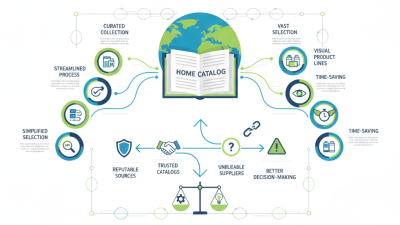
Why Choose Home Catalogs for Your Global Sourcing Needs?
-

How to Find the Best Home Catalogs for Global Buyers?
-
Innovative Solutions for Styles Home Furnishings Worldwide Buyers
-

Essential Guide to Selecting Stylish Furniture for Your Global Purchasing Needs

Catalog
Replacement Cushions
New Jersey Catalog