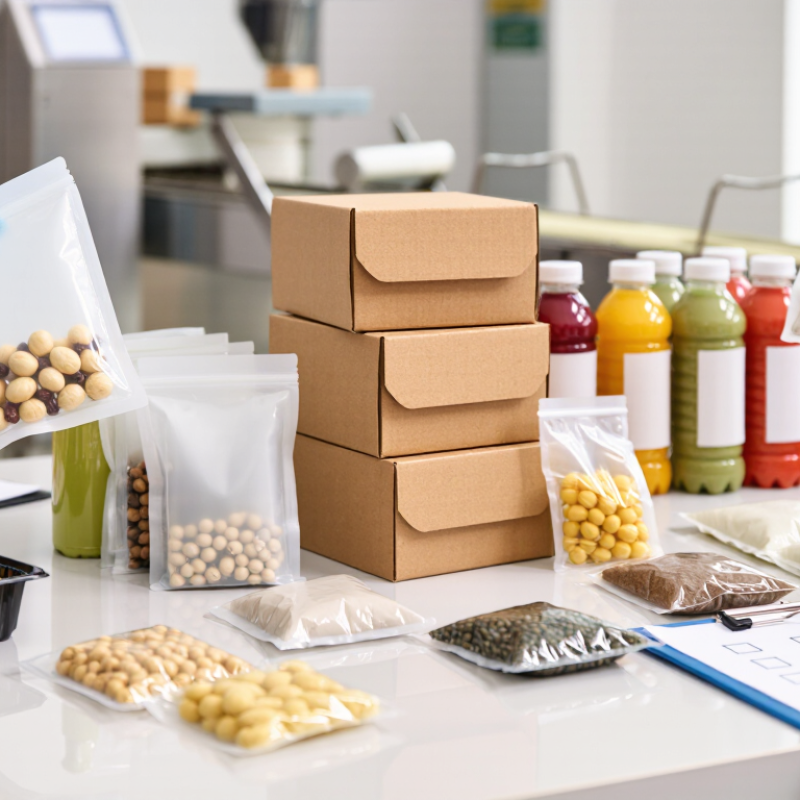

China Top 10 Food Packaging Suppliers for Global Buyers
Choosing a Food Packaging supplier is not just a price comparison. A carton may look sturdy in a sample room, then soften beside condensation on a chilled shipment. A pouch may seal well on one filling line and require adjustment on another. Global buyers need to assess materials, production capacity, quality controls, communication, and delivery consistency—not glossy photographs alone.
Food-packaging expert Dr. Aaron L. Brody has written extensively about packaging performance and food protection. A useful editorial paraphrase of that emphasis is: “Protect the food first; let the design earn attention second.” This is not presented as a verbatim quotation. It captures a practical buying principle: packaging must suit the product, its filling process, and the journey to market. A polished sample is only a start.
This guide introduces ten China-based food packaging suppliers for global buyers. It considers common formats, including flexible pouches, paper containers, trays, and bottles, while encouraging buyers to verify specifications directly. Ask for current material data, production samples, quality documentation, and clear answers about lead times. Check whether the supplier understands your product’s weight, storage conditions, and filling equipment. Details matter. The list is a starting point, not an endorsement or a substitute for due diligence. Supplier capabilities can change, and a strong factory may still be the wrong fit for a particular product. That part is easy to overlook. A careful comparison can help buyers narrow the field, ask sharper questions, and choose a Food Pack partner with fewer surprises.
China’s Packaging Industry Snapshot: RMB 1.154 Trillion Revenue in 2023 (CPF)
China’s packaging industry recorded RMB 1.154 trillion in revenue in 2023, according to CPF. The figure signals a substantial manufacturing base, but it describes the wider packaging industry, not food packaging alone. That distinction matters when global buyers compare suppliers.
For food packaging, market scale can mean access to varied materials, production equipment, and converting capacity. Yet revenue alone says little about a factory’s actual fit. Buyers should ask for packaging specifications, sample runs, production lead times, and inspection records. A sealed pouch may look simple on a screen; its seal strength and print alignment become obvious only under testing.
The number is impressive. Still, it is not a scorecard. Supplier capability can differ sharply by material, process, and order size. A smaller producer may suit a custom run, while a larger plant may handle repeat volumes more consistently. Even these patterns have exceptions. Requesting recent, relevant documentation helps buyers judge performance rather than rely on scale. One limitation remains: headline industry data cannot replace direct factory checks.
How the Top 10 Suppliers Are Selected: Scale, Export Reach, and Certifications
A credible top-ten list should start with evidence, not polished claims. Supplier scale can be assessed through production capacity, facility size, workforce, and the range of packaging formats made in-house. Numbers need context. A large stated output means little if it covers several plants or includes products outside food packaging. Buyers should ask for recent capacity figures and sample production records.
Export reach is more than a map of claimed destinations. Look for established shipping lanes, export documentation experience, and references from customers in comparable markets. Response time matters, too. A supplier that can explain carton dimensions, pallet patterns, and lead times clearly may be easier to work with than one reporting a larger sales footprint. Still, export data can be incomplete, and public records rarely tell the whole story.
Certifications should be checked for scope, validity, and the actual manufacturing site. A certificate held by a headquarters may not cover the factory making a buyer’s order. Ask for current copies, audit dates, and details on material traceability and quality controls. Then confirm food-contact requirements for the destination market. That takes effort. It is easy to overvalue a certificate and miss everyday process gaps, such as inconsistent batch records or unclear complaint handling. A careful selection weighs all three areas, while acknowledging that no ranking can replace a factory audit or product testing.
Profiles of 10 Chinese Food Packaging Suppliers by Product Segment
The segment-led profiles compare ten supplier types, not a universal ranking. Flexible-film makers serve snack and frozen-food lines; retort-pouch producers target shelf-stable meals. Paperboard converters make cartons, while molded-pulp suppliers produce protective trays for eggs and produce. Aluminum-foil specialists offer oven-ready containers, and PET bottle makers package sauces and drinks. Glass-container suppliers serve sauces and preserves; thermoformers make clear deli trays. Label converters provide moisture-resistant labels, while closure makers supply caps and lids. Details matter.
Material choices have measurable consequences. The OECD’s Global Plastics Outlook reports that packaging generated 40% of plastic waste in 2019. UNEP’s 2023 Turning off the Tap report identifies packaging as accounting for about 36% of plastics produced. Buyers can use these figures to frame supplier discussions around material weight, barrier performance, and end-of-life options. Request food-contact documentation, seal-test results, and samples tested on your filling line.
Compare minimum order quantities, lead times, printing limits, and tooling costs using the same specification. A pouch or tray quote may exclude setup charges. Desk research also has limits: stated production capacity is difficult to verify without an audit. A low price alone can hide a poor fit.
Food-Contact Compliance: China’s GB 4806 Standards and Global Requirements
China’s GB 4806 standards set food-contact safety requirements for materials such as plastics, paper, coatings, and rubber. GB 4806.1 provides general requirements, while material-specific standards address particular packaging types. The right test depends on what the package contains and how it is used. Hot soup, frozen food, and dry snacks do not present the same conditions. Buyers should check current standard editions and request documents for the exact material and intended use.
When comparing Chinese suppliers, ask for relevant test reports, declarations of compliance, and batch traceability records. Confirm that testing reflects the food type, contact time, and temperature, rather than relying on a generic certificate. Requirements in the United States and European Union may differ from China’s rules. A report for one market may not establish compliance in another. That matters. In practice, paperwork can look complete while omitting a lining, ink, or adhesive used in the final package. It is worth checking the full packaging structure, not just the main material.
Tips: Ask for a sample from the production line, then match its specifications to the test report. Check whether the report names the same material and supplier. Small details count. If a document is unclear, ask for clarification before placing an order.
China Top 10 Food Packaging Suppliers for Global Buyers - Food-Contact Compliance: China’s GB 4806 Standards and Global Requirements
A practical, standards-based checklist for evaluating food-packaging suppliers. Company names and brand rankings are intentionally omitted.
| No. | Compliance area | China reference | Global buyer check | Evidence to request from the supplier |
|---|---|---|---|---|
| 1 | General food-contact safety | GB 4806.1-2024 sets general safety requirements for food-contact materials and articles; it took effect on September 6, 2025. | For the EU, Regulation (EC) No 1935/2004 establishes the general framework, including safety and traceability requirements. Confirm the rules applicable in the destination market. | Current declarations of compliance, material specifications, intended-use conditions, and traceability records for the finished article. |
| 2 | Plastic packaging | GB 4806.7-2023 covers plastic materials and articles intended for food contact. | For EU plastic food-contact materials, check Regulation (EU) No 10/2011, including applicable substance restrictions, migration limits, and conditions of use. | Resin and additive details, intended food types and temperatures, migration test reports where applicable, and a declaration covering the supplied article. |
| 3 | Paper and paperboard | GB 4806.8-2022 covers paper and paperboard materials and articles intended for food contact. | EU buyers should assess the general requirements in Regulation (EC) No 1935/2004 and applicable national rules; paper and board do not have one fully harmonized EU-specific measure equivalent to the plastics regulation. | Paper grade, recycled-fibre information where relevant, barrier or coating details, intended-use limits, and supporting migration or safety assessments. |
| 4 | Metal packaging | GB 4806.9-2023 covers metal materials and articles intended for food contact. | Check the destination market’s food-contact rules for the metal, coating, and any internal lacquer or sealant; EU requirements may also include applicable national measures. | Metal composition, coating or lacquer specifications, curing information, intended-use conditions, and relevant test or compliance documentation. |
| 5 | Rubber components | GB 4806.10-2016 covers rubber materials and articles intended for food contact. | Confirm that seals, gaskets, and closures are suitable for the specific food type, contact time, and temperature in the destination market. | Rubber formulation or controlled material specification, use limitations, and supporting compliance or migration assessment for the finished component. |
| 6 | Adhesives | GB 4806.11-2023 covers adhesives used in food-contact materials and articles. | For multilayer packaging, assess the adhesive in the context of the complete structure and the intended conditions of use, including the potential for transfer through layers. | Adhesive technical data, application and curing conditions, layer construction, and supporting assessment for the finished packaging structure. |
| 7 | Multilayer and composite materials | GB 4806.13-2023 covers composite materials and articles intended for food contact. | Review the complete laminate or composite, not only each individual layer; consider adhesives, coatings, barriers, and foreseeable migration pathways. | Layer-by-layer structure, material specifications, manufacturing controls, intended-use conditions, and finished-article compliance documentation. |
| 8 | Printing inks | GB 4806.14-2023 covers printing inks used in food-contact materials and articles. | For printed packaging, assess the ink’s intended application and the risk of transfer, including set-off during stacking or winding and migration through the substrate. | Ink formulation or compliance statement, print-side details, curing controls, packaging construction, and evidence supporting the intended use. |
| 9 | Good manufacturing practice and traceability | Use applicable Chinese food-contact standards together with documented manufacturing and quality controls. | EU Regulation (EC) No 2023/2006 sets good manufacturing practice requirements for materials and articles intended to contact food. | Quality procedures, batch records, change-control process, supplier controls, complaint handling, and a documented traceability system. |
| 10 | United States market access | Chinese GB compliance does not by itself establish compliance with U.S. requirements. | Check applicable U.S. FDA food-contact provisions, including relevant parts of 21 CFR Parts 174–179. A Food Contact Notification (FCN), where required, is generally limited to its stated substance, manufacturer or supplier, and conditions of use. | Applicable regulatory citations, identity of the authorized substance and supplier, conditions of use, and supporting compliance documents for the exact packaging application. |
Buyer note: A standard reference or supplier declaration alone does not prove that every finished package is compliant. Verify the current standard versions, destination-market rules, food type, contact conditions, and test scope for the exact packaging construction before purchase.
Buyer Checks: MOQ, Lead Time, Traceability, and Recyclability
When comparing China’s top food packaging suppliers, start with order details, not the catalogue. Ask each supplier for the minimum order quantity (MOQ) by material, size, and printing method. A printed pouch may require a larger run than a plain stock container. Request a written quote for your actual specification. Small trials matter.
Lead time should be split into sample approval, production, and shipping preparation. Ask what starts the production clock, and whether artwork changes reset it. Confirm dates in writing, then leave room for inspection or freight delays. A neat estimate can still slip. Check how the supplier tracks batches, raw-material lots, and finished cartons. Request a sample traceability record with sensitive commercial details removed.
For recyclability, avoid relying on a broad label alone. Ask for the full material structure, including coatings, inks, lids, and barriers, then check whether local collection systems accept it. A package may be technically recyclable but rarely collected where it will be sold. Request supporting test documents and inspect a physical sample. One overlooked layer can change the answer. Compare suppliers using the same checklist, and note what remains uncertain.

Catalog
Replacement Cushions
New Jersey Catalog