

Best Preschool Sensory Furniture Manufacturers in China?

Choosing the best Preschool Sensory Furniture manufacturers in China takes more than comparing colorful product photos. Buyers need to examine construction, material specifications, age suitability, cleaning requirements, and the evidence behind each supplier’s claims. Small details matter: a wobbling balance board, rough edge, or difficult-to-clean cushion can change how a product works in a busy classroom.

The need for thoughtful early-learning environments is well documented. UNICEF’s 2019 report, A World Ready to Learn, estimated that 175 million children worldwide were not enrolled in pre-primary education. The World Health Organization’s 2019 guidelines recommend that children aged three to four get at least 180 minutes of physical activity daily, including 60 minutes of moderate-to-vigorous activity. These findings do not prove that sensory furniture improves development. They do, however, underline why movement, play, and safe opportunities to explore deserve careful attention in preschool settings.

This guide introduces manufacturers in China and the practical questions buyers should ask before requesting samples or quotations. Look for clear product dimensions, material details, finish options, stability information, and realistic lead times. Ask how the supplier checks consistency between samples and production batches. A polished catalogue is useful, but it is not proof of reliable quality. The category itself also lacks one universally applied definition, so “sensory” can mean very different things from one supplier to another. That makes comparison less tidy than it should be—and buyers may need to verify claims themselves.
Best Preschool Sensory Furniture Manufacturers in China?

What Preschool Sensory Furniture Includes

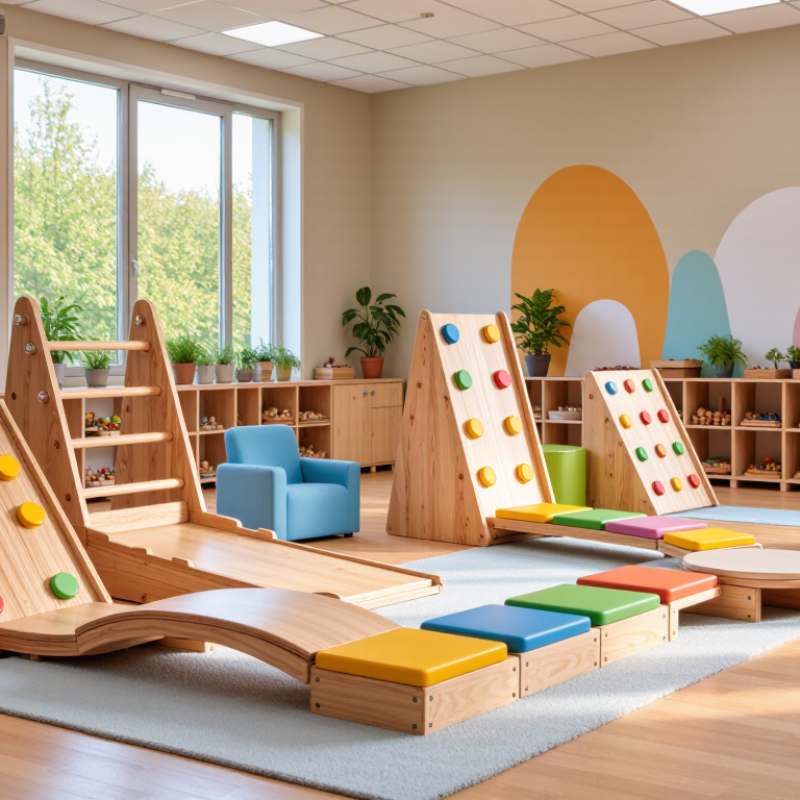
Preschool sensory furniture includes more than brightly colored chairs. It combines seating, movement, tactile, and quiet-zone elements that help children explore through everyday routines. Examples include low rocking seats, wobble cushions, soft floor mats, textured panels, and small enclosed reading nooks. Each item should fit a child’s size and offer stable, easy-to-clean surfaces. Small details matter.

Movement options can support active play without turning the classroom into a gym. The World Health Organization’s 2019 guidelines recommend at least 180 minutes of varied physical activity daily for children aged three to four, including 60 minutes of moderate-to-vigorous activity. Furniture cannot deliver that target alone, but a clear path, sturdy stepping blocks, and flexible seating can make movement easier to include. Supervision still matters.

Tactile furniture may use smooth wood, ribbed fabric, or washable textured inserts. Quiet spaces can pair a supportive seat with softer lighting and fewer visual distractions. Not every child finds the same textures calming; some may avoid them. That is worth admitting. Teachers can observe reactions and offer choices instead of assuming one setup suits everyone. Sensory furniture works best as part of a varied classroom, not as a substitute for skilled adult support or individualized observation.

How to Assess Preschool Sensory Furniture Manufacturers

When assessing preschool sensory furniture manufacturers in China, look beyond colorful catalogs. Ask how each item supports a specific classroom activity, such as quiet reading, gentle rocking, or tactile exploration. A useful product description should name its materials, dimensions, age range, and cleaning method. Details matter.

Request current test reports and clear material specifications for foam, fabric, wood, and coatings. Check whether seams are reinforced, edges are smooth, and removable covers can withstand frequent washing. Ask how the factory checks dimensions and finish quality across production batches. One attractive sample is not enough. Ask for photos or inspection records from routine production, too.

Communication is part of quality. Send a short list of requirements and compare how clearly each manufacturer answers questions about lead times, customization, packaging, and replacement parts. A sample can reveal more than a video: sit on it, inspect stitching, and wipe the surface with the cleaner your staff actually use. If answers feel vague, pause and ask again. I may be overly cautious about small details, but vague material descriptions deserve a second look. Request references from buyers with similar preschool projects, and confirm that the products suit your room size and daily routines.

Notable Preschool Sensory Furniture Manufacturers in China

Notable preschool sensory furniture manufacturers in China should be assessed by how well their products work in real classrooms, not by catalog photos. UNICEF’s 2019 report, A World Ready to Learn, estimated that 175 million children were not enrolled in pre-primary education worldwide. That figure underlines the need for accessible early-learning spaces, though it does not measure furniture quality. Buyers can compare low platforms, balance elements, tactile panels, and quiet-corner seating against children’s ages and room layouts. Small details matter. Check rounded edges, stable bases, washable surfaces, and clear material specifications.

A capable manufacturer should provide dimensions, load guidance, cleaning instructions, and consistent quality records for each product range. Ask for samples or detailed construction photographs, then inspect seams, fasteners, and surface finishes. These checks are more useful than vague claims about “sensory benefits.” A bright color alone does not make an item developmentally appropriate. Even a sturdy piece may be too large for a crowded classroom, or too difficult to sanitize between activities. That is easy to overlook. Shortlist suppliers that explain design choices plainly and can adapt sizes without compromising stability; verify those details before placing a bulk order.

Best Preschool Sensory Furniture Manufacturers in China? – Notable Preschool Sensory Furniture Manufacturers in China

A practical comparison of manufacturer specialties and verifiable sourcing checks. No company names or brand rankings are included.

Manufacturer Specialty Typical Preschool Products Key Sourcing Checks Relevant Standards or References Best Fit for
Children’s furniture and casework Low-height tables, chairs, storage units, reading furniture, and activity stations. Request age and size specifications, stability and load-test records, edge and corner details, finish information, and instructions for anchoring tall units where needed. China’s GB 28007-2011, General Technical Requirements for Children’s Furniture, is a relevant reference for children’s furniture. Confirm the applicable standard edition and product scope for the order. Classrooms needing durable furniture that combines sensory activities with everyday learning and storage.
Soft-play and foam-product manufacturers Foam blocks, padded benches, soft climbing forms, floor cushions, and low-level movement equipment. Check foam density and dimensions, cover material, seam strength, cleaning instructions, fire-safety documentation where required, and test reports for the finished product. Use the destination market’s applicable furniture, upholstery, and fire-safety requirements. Toy standards apply only when the product is classified and marketed as a toy. Calm corners, gross-motor areas, and spaces where soft, movable equipment is preferred.
Woodworking and educational furniture manufacturers Activity tables, tactile panels, wooden balance elements, sensory boards, and modular play structures. Ask for wood and panel-material details, coating specifications, rounded-edge measurements, hardware checks, and test reports covering the complete assembled item. GB 28007-2011 may be relevant to children’s furniture. If an item is a toy, check the applicable parts of China’s GB 6675 toy-safety series separately. Buyers seeking wooden textures, fixed sensory installations, or coordinated classroom furniture.
Plastic molding and activity-table manufacturers Water or sand activity tables, molded seats, sensory trays, and washable modular components. Verify material identification, intended-use limits, drainage and cleaning design, pinch-point risks, stability, and chemical-safety documentation appropriate to the product category. GB 6675 is a toy-safety reference when the product is legally classified as a toy; it should not be treated as a blanket furniture certification. Settings that need wipe-clean surfaces or supervised water, sand, and loose-parts activities.
Custom sensory-room and integrated-project suppliers Made-to-measure sensory walls, room layouts, modular seating, acoustic elements, and combinations of fixed and movable equipment. Request dimensioned drawings, installation and anchoring plans, material schedules, maintenance guidance, replacement-part availability, and product-specific test documentation. Applicable requirements depend on whether each component is furniture, a toy, building material, or installed equipment. Confirm classification and destination-market rules component by component. Preschools planning a coordinated sensory room or a project requiring custom dimensions and installation.

Note: The entries describe product-specialty categories, not verified individual manufacturers or a ranked supplier list. Standards references indicate potential relevance; buyers should confirm the current edition, product classification, test scope, and destination-country requirements with the supplier and an accredited testing body.

Product Safety and Quality Standards to Compare

When comparing preschool sensory furniture manufacturers in China, request test reports for the exact models you plan to buy. Check that reports identify the tested materials, product version, and testing laboratory. A certificate for a similar chair may not cover a foam tunnel or fabric panel. Requirements also vary by destination, so confirm applicable standards with a qualified assessor.

Look closely at physical safety. Check rounded edges, stable bases, secure fasteners, and seams that resist pulling. For sensory pieces, ask whether detachable parts could come loose during normal classroom use. Request material information and test results for relevant chemical limits, surface coatings, and textile performance. Small details matter. A report is useful only when its scope matches the product.

Quality depends on repeatable production, not just a polished sample. Ask how the factory inspects incoming foam, wood, fabric, and hardware, and how it records batch checks. Request photos or records from a recent production run, then compare them with the approved sample. Ask again. It can feel repetitive, but one uncomfortable question may reveal a gap in traceability. No single document proves every unit is safe; consistent checks and clear records make supplier claims easier to evaluate.

How to Choose and Verify a Chinese Supplier

Choosing a Chinese manufacturer for preschool sensory furniture starts with the product, not the catalogue. Define the age range, room layout, and activities first. A low balance beam, textured wall panel, or soft climbing block each needs different materials and safety checks. Ask suppliers for drawings, material specifications, load-test results, and clear cleaning instructions. Check that test documents match the exact product and model. A polished certificate image alone proves little.

Verify the workshop as well as the paperwork. Request a live video tour or arrange an independent inspection before production. Look for stable cutting and upholstery processes, tidy material storage, and checks for sharp edges, loose seams, and inconsistent dimensions. Order a sample and compare its foam firmness, stitching, finish, and measurements with the approved specification. Differences can appear in bulk production. Put agreed tolerances, packaging details, delivery dates, and remedies for defects in writing. Not every small workshop will have perfect records; gaps deserve questions, not assumptions.

Tips: Ask for recent production photos and references for similar projects. Confirm who performs testing and whether the report covers the finished item. Keep one approved sample for comparison. If an answer stays vague, pause before paying a deposit. A careful supplier should explain limitations plainly, too.