How to Choose the Best Stainless Steel Sink?
A kitchen sink handles more daily work than its size suggests. It catches splashes, supports food preparation, and often holds heavy pots after dinner. Choosing the right Stainless steel sink is not just a matter of picking a shiny finish. Small details matter.
Material thickness, steel quality, bowl depth, and installation style all affect how a sink feels in everyday use. A thicker basin may sound quieter, but thickness alone does not guarantee better construction. Look for clear product specifications, a durable finish, and practical sound-dampening features. Check the cabinet dimensions too. A beautiful sink that does not fit your kitchen is a costly frustration.
Think about your routines. A deep single bowl can make washing a roasting pan easier, while divided bowls may help separate tasks. Brushed finishes tend to disguise small marks better than highly polished surfaces, though they still need regular cleaning. Hard water can leave spots. That is easy to overlook in product photos.
There is no perfect specification for every home. The best choice depends on your space, habits, and willingness to maintain the surface. This guide will explain the key differences, common trade-offs, and questions worth asking before you buy. A little comparison now can prevent years of daily irritation. Even then, small scratches may appear. That is part of real use.
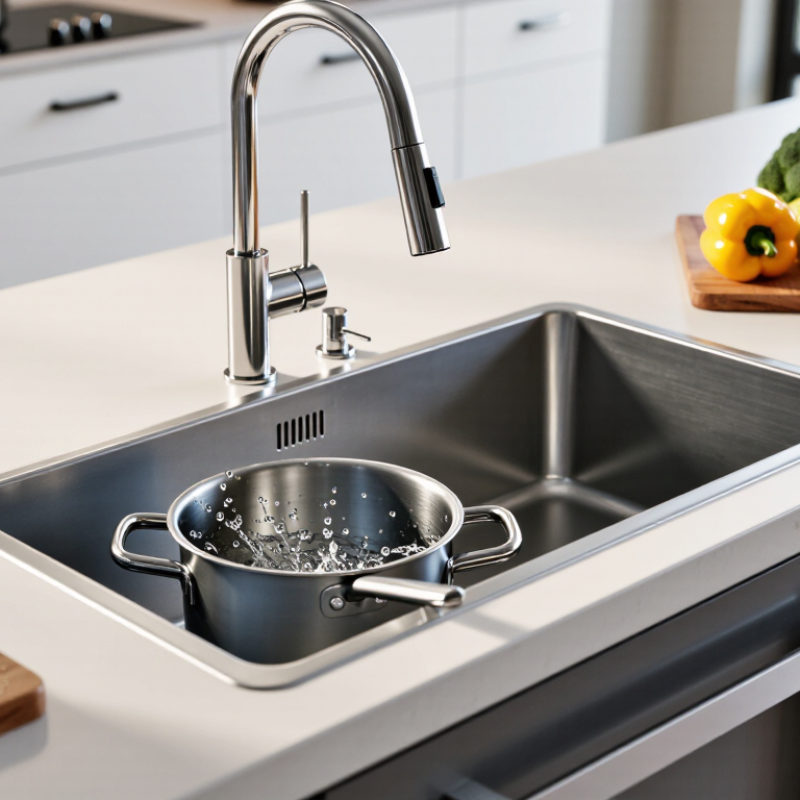
Determine Your Kitchen’s Size, Layout, and Usage Needs
Before choosing a stainless steel sink, measure the cabinet opening, not just the countertop. A 30-inch cabinet may not fit a 30-inch sink; check the sink’s cutout and minimum cabinet requirements. Allow space for mounting clips, plumbing, and faucet holes. Measure twice.
Look at how the sink fits your kitchen’s work areas. Placing it near the dishwasher can make loading easier, but check that an open door won’t block a drawer or walkway. In a small kitchen, preserve clear counter space beside the sink for rinsing produce or setting down a hot pan. Small kitchens differ. An island sink may improve access, yet it can take away valuable prep space.
Think about what you wash most often. A single bowl can accommodate a roasting pan, while two bowls let you separate washing and rinsing. Neither is automatically better. Sink depth matters, too: a deeper bowl hides dishes, but may feel uncomfortable if you are shorter or wash by hand. Measure your largest cookware, then compare it with the bowl’s usable interior dimensions. It is tempting to choose the biggest sink, but the lost counter space may matter more every day.
Compare Stainless Steel Grades, Gauge, and Finish
A sink’s grade matters more than its shine. The British Stainless Steel Association’s grade-composition tables list 304 stainless steel at about 18–20% chromium and 8–10.5% nickel. Grade 316 contains roughly 2–3% molybdenum, which improves resistance to chloride-related corrosion. These figures align with ASTM A240/A240M specifications. For most kitchens, 304 is a practical choice; coastal homes or frequent salt exposure may justify 316. Still, grade alone cannot tell you how well a finished sink will perform.
Gauge describes sheet thickness, but the numbering can be confusing: lower gauge usually means thicker steel. A 16-gauge sheet is about 1.5 mm thick, while 18 gauge is about 1.2 mm. Check the stated millimetres, not just the gauge. A heavier bowl can feel quieter and resist denting better, though mounting and sound-dampening pads matter too. Details get missed.
Finish changes daily upkeep. A brushed or satin surface softens the look of fine scratches, while a mirror polish makes water spots and fingerprints easier to see. Run your fingers across a sample under bright light; the texture can feel rougher than photos suggest. I would not choose by finish alone. Hard water can leave marks on any surface, and even a well-made sink needs regular wiping.
How to Choose the Best Stainless Steel Sink
Compare typical sheet thickness by gauge, then consider steel grade and finish to suit your kitchen and water conditions.
Gauge: A lower gauge number means thicker steel. The values shown are approximate US sheet-steel thicknesses; actual sink thickness can vary by product and manufacturing process.
Grade and finish: Type 304 is a common choice for kitchen sinks. Type 316 contains molybdenum, which improves resistance to chlorides, while Type 430 contains little nickel and is generally less resistant to chloride exposure. Brushed finishes help disguise everyday scratches; polished finishes are shinier but can show marks more readily.
Choose a Sink Configuration and Installation Style
Choose the bowl layout around the work you actually do. A single-bowl sink gives large pans and baking sheets room to lie flat; a divided double bowl helps separate rinsing from washing, but limits space for oversized cookware. Houzz’s 2024 U.S. Kitchen Trends Study reported that 64% of homeowners upgrading a kitchen sink selected an undermount model. It is popular, not universally practical. Undermount installation suits solid-surface counters and leaves the counter edge clear for wiping crumbs into the basin. Confirm the counter material, cabinet width, and faucet reach before choosing. Small details matter.
Top-mount sinks rest on the counter and can be simpler to fit, especially when replacing a similar sink. Their visible rim may collect grime, though careful sealing and cleaning help. Apron-front models expose the sink’s front, so check cabinet compatibility and support requirements before ordering; retrofits can involve more than a cutout. Measure the cabinet opening, not just the old basin. Measure twice. Also consider drain placement: a rear-set drain can leave more usable cabinet space below, while plumbing alignment may affect installation cost. I’d avoid choosing by bowl depth alone; a deep basin can feel roomy but may strain your back during long washing sessions.
Evaluate Noise Control, Drainage, and Practical Features
A stainless steel sink can sound surprisingly loud when a pan hits the basin. Look for sound-dampening pads beneath the bowl and a coating that covers a broad area. These features soften clatter, though they rarely make a sink silent. Thicker steel may feel more solid, but thickness alone does not determine noise. Tap the basin if you can. A sharp ring may carry through a lightweight cabinet.
Drainage matters during everyday cleanup. A gently sloped basin helps water move toward the drain instead of lingering around crumbs. Drain placement also affects usable space; a rear drain can leave more room beneath the sink for stored items. Check the corners, too. Very tight corners can be harder to wipe clean, while broad curves may reduce flat working space. A sink grid can protect the steel, but it adds another piece to wash.
Think about practical features before choosing a deep or wide bowl. Measure the cabinet opening, faucet reach, and plumbing position, then compare them with the sink’s specifications. A deep basin hides dishes from view, yet it may feel awkward for shorter users. I used to focus too much on appearance. That was a mistake. Consider whether accessories such as a colander or cutting board fit securely, and whether the finish shows water spots in your kitchen’s lighting. Some details are easy to miss. On paper, a sink can look perfect; at the counter, small inconveniences become daily habits.
Compare Durability, Maintenance, and Overall Value
A stainless steel sink’s durability depends on more than its appearance. Look for clear information about the steel grade, construction, and thickness. A heavier sink may feel sturdier and resist dents better, though cabinet support and installation also matter. The finish affects daily wear: brushed surfaces tend to disguise small scratches, while polished ones show them more readily. Neither stays flawless forever.
Maintenance is usually simple. Rinse away food and soap, then wipe the basin with a soft cloth to limit water spots. For dried mineral marks, a gentle cleaner and a little patience are safer than steel wool, which can leave visible scratches. Check the care instructions before using strong chemicals. Small details matter. A sink that is easy to clean may save time, but only if its corners and drain area are accessible.
Overall value includes more than the purchase price. Compare the sink’s size, bowl depth, mounting style, sound-dampening pads, and included drain parts. A low-cost model can become less appealing if it needs extra components or does not fit the existing counter. Conversely, paying more is not automatically worthwhile. Measure the cabinet opening carefully; I’ve seen attractive sinks become awkward choices because their bowls were too deep for the plumbing below. There is no perfect finish, and that is worth considering.

 Catalog
 Replacement Cushions
 New Jersey Catalog