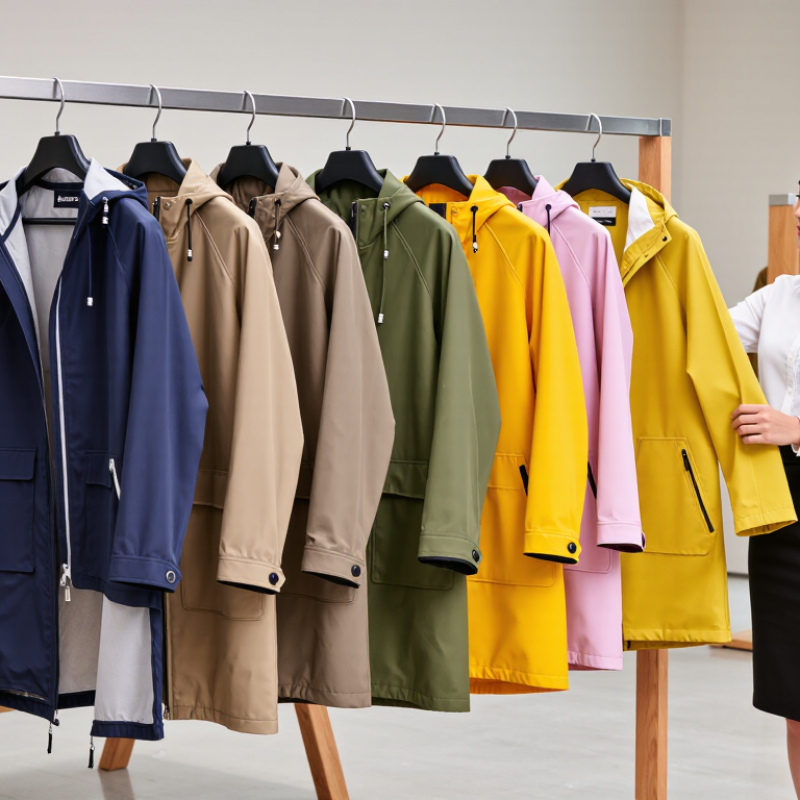

How to Choose the Best Fashion Raincoat for Your Business?
Choosing a Fashion Raincoat for your business is not just a color decision. It affects product quality, customer comfort, and how reliably each order can be fulfilled. A coat may look sharp on a hanger but feel stiff when worn over a sweater. Small details matter.
This guide explains how to assess fabric weight, waterproof performance, seam construction, hood design, and fit before placing an order. It also covers practical supplier checks, including sample quality, size consistency, minimum order quantities, lead times, and clear care instructions. Ask how the garment performs in steady rain, not only under showroom lights. A neatly sealed seam and adjustable cuffs can make more difference to a customer than decorative hardware.
Business needs vary. A boutique may value distinctive colors and refined trims, while a uniform buyer may prioritize durability and repeatable sizing. Compare samples in realistic conditions, and record what you notice: lining comfort, zipper movement, pocket depth, and how the coat folds for storage. Then review pricing alongside packaging and delivery timelines. Cheap can become costly.
There is no perfect specification for every market. A heavier fabric might offer reassuring coverage but feel too warm in mild weather; a lighter option may need more careful performance testing. That trade-off deserves honest attention. Use the following sections to build a clear selection process, ask suppliers specific questions, and choose a Fashion Raincoat that suits both your customers and your business goals.
Define Your Business Needs and Intended Use
A business raincoat should match the work people actually do, not just look polished on a hanger. For outdoor events, staff may stand for hours beside a windy entrance. A longer cut, adjustable hood, and sealed seams can help keep them comfortable. For quick trips between buildings, a lighter coat may be easier to wear and store. Fit matters.
Consider who will wear the coats, how often they will be used, and what they need to carry. Delivery staff may need roomy pockets and sleeves that allow easy movement. Customer-facing teams may need coordinated colors and a neat silhouette. Check whether coats will be layered over uniforms; a close-fitting sample can feel restrictive over a sweater. One detail is easy to miss: wet coats need somewhere practical to dry. A storage plan matters too.
Tips: Ask a few employees to test sample coats in real conditions. Have them reach, bend, and zip the coat while wearing their usual uniform. Note complaints about cuffs, hood visibility, or noisy fabric. It is tempting to prioritize appearance, but a coat that stays in the closet serves no one. A small trial may reveal an awkward fit before a larger order.
Compare Raincoat Styles, Materials, and Weather Protection
For a fashion raincoat range, compare silhouette and use together. A trench-style coat looks polished over office clothing and usually offers better coverage below the hips. A lightweight hooded shell suits walking commutes and packs into a smaller space. A poncho is easy to layer, but wind can lift its sides. Fit matters.
Material affects comfort as much as protection. Coated polyester is light and dries quickly, while a cotton blend can feel softer but may take longer to dry. Breathable membranes can reduce clamminess during active wear, though performance varies by construction. Ask suppliers for fabric specifications and test a sample in steady rain. Touch the lining, check zipper guards, and inspect seam tape. Small flaws show up fast.
Match protection to local weather. For frequent downpours, look for sealed seams, an adjustable hood, and cuffs that close snugly. A water-repellent finish can help with brief showers, but it is not the same as a waterproof barrier. Check whether the stated rating comes from a documented test. A stylish coat may still leak at the shoulders. That is an awkward return to manage. For business buyers, compare care instructions, size consistency, and sample quality before placing a large order.
Assess Fit, Comfort, and Practical Features
A fashion raincoat should fit the clothes customers will actually wear beneath it. Try it over a light sweater and a work jacket, not just a thin shirt. The shoulders should sit comfortably, and the sleeves should cover the wrists when arms reach forward. Ask the wearer to sit, turn, and lift a bag. If the fabric pulls across the back, the fit may look neat on a hanger but feel restrictive outdoors.
Comfort depends on more than size. Check the lining against the skin, and look for smooth seams around the neck and underarms. A hood should stay in place without blocking side vision. Adjustable cuffs can help keep rain from running up the sleeves, while a two-way zipper may make cycling or sitting easier. Small details matter. Still, extra features add weight, and a coat that feels stuffy during a short fitting may become uncomfortable on a longer walk.
Practical checks are easy to overlook. Test the pockets with a phone and keys inside; they should close securely without sagging. Make sure the fabric allows enough movement, and consider whether it dries at a reasonable pace between wears. Rain protection varies by construction, so review product specifications rather than judging by appearance alone. One fitting can miss things. If possible, let staff wear a sample through a commute or a wet-day trial, then note where it rubs, leaks, or feels warmer than expected.
Review Branding Options, Durability, and Supplier Standards
How to Choose the Best Fashion Raincoat for Your Business?
Start with the intended use: daily commuting, outdoor events, or staff uniforms. Check fabric weight, waterproof performance, seam sealing, and comfort over a sweater. Textile Exchange’s Materials Market Report 2024 estimates that global fiber production reached 124 million tonnes in 2023, with polyester accounting for about 57%. That scale makes material traceability worth checking, not just the fabric label. Looks good. But ask whether the coating and seams still perform after repeated wear and washing.
Branding needs to work with the coat’s construction. A small logo on the chest may suit embroidery, while lightweight waterproof shells can pucker or leak around needle holes. Heat transfers may preserve the surface, but test them after washing and flexing. Request a sample with the actual logo, then inspect the inside seams and collar. The sample can reveal flaws that a product sheet will not.
Supplier standards matter as much as the finished coat. Fashion Revolution’s 2023 Fashion Transparency Index found an average score of 26% across the 250 largest fashion brands it reviewed. That points to a practical gap: public claims alone may not show where materials come from or how factories are monitored. Ask suppliers for current, product-relevant certificates, test reports, factory details, and clear renewal dates. Verify document scope directly. I would also request written repair or replacement terms; it is an easy detail to overlook when comparing prices.
| Decision Area | What to Compare | Practical Considerations | What to Request or Verify |
|---|---|---|---|
| Branding method | Embroidery, screen printing, heat transfer, or a removable patch | Embroidery creates a textured finish but adds needle holes and may affect waterproofness at the decorated area. Printed or transferred artwork avoids needle perforations; confirm that the method suits the shell coating and intended wash care. | Ask for a decorated sample on the actual fabric, artwork placement dimensions, color approval, and written care instructions. |
| Shell material | Coated polyester, coated nylon, or a membrane-backed fabric | Coatings and membranes can provide water resistance, while fabric weight, hand feel, breathability, and abrasion behavior vary by construction. A fabric name alone does not establish garment performance. | Request the fabric composition, construction details, coating or membrane information, and test results for the finished fabric or garment. |
| Rain protection | Seams, closures, hood design, and fabric water resistance | Water can enter through stitching, zippers, pockets, and openings even when the fabric repels water. Seam sealing and storm flaps can improve protection when designed for the intended use. | Ask which seams are sealed, how the front closure is protected, and what test method and conditions support any waterproof or water-resistant claim. ISO 811 is a hydrostatic-pressure test method for textile fabrics. |
| Durability | Fabric strength, abrasion resistance, seam construction, and hardware | Repeated wear, laundering, and exposure to sunlight can affect appearance and performance. Reinforced stress points and suitable zippers or snaps can help a coat withstand regular use. | Request relevant abrasion, tear, seam-strength, colorfastness, and laundering test reports where applicable. Check that samples and production use the same specifications. |
| Fit and usability | Size range, layering room, adjustable features, and pocket layout | Workwear may need to fit over a uniform or light layers. Adjustable cuffs and hoods can improve coverage; pocket openings should remain usable without compromising rain protection. | Review a size chart with garment measurements, try on pre-production samples, and test movement, layering, hood adjustment, and pocket access. |
| Supplier quality controls | Written specifications, inspections, sample approval, and production traceability | Clear specifications reduce variation in color, fabric, trims, logo placement, and sizing. A pre-production sample gives both parties a reference before bulk manufacturing. | Request a production specification sheet, approved sample process, inspection criteria, defect-handling procedure, and batch or material traceability records. |
| Chemical and material claims | Restricted-substance controls and evidence for sustainability claims | Certifications and test reports apply to defined products, materials, or supply-chain stages; they should not be treated as proof of every environmental or safety claim. | Ask for current, scope-matched documentation. OEKO-TEX STANDARD 100 concerns testing textile products for harmful substances; the Global Recycled Standard (GRS) includes requirements related to recycled content and chain of custody. |
| Visibility requirements | Reflective details and applicable high-visibility garment requirements | Decorative reflective trim is not automatically equivalent to a certified high-visibility garment. Requirements depend on the wearer’s task and workplace risk assessment. | If high-visibility performance is required, verify the applicable local standard and certification scope. ISO 20471 specifies requirements for high-visibility clothing; confirm that the finished garment, not just a component, meets the relevant requirements. |
| Commercial terms | Minimum order quantity, lead time, packaging, and replacement policy | Custom colors and decoration can affect minimum quantities and production timelines. Allow time for sample approval, testing, and any required revisions. | Obtain written pricing, order quantities, delivery schedule, packaging details, tolerance limits, and a process for addressing defects or late delivery. |
Balance Cost, Quality, and Business Requirements
A fashion raincoat for business needs to look right and perform during real working days. Start with its use: retail staff may need lightweight coats for short walks, while delivery teams need room for layers and repeated movement. Check fabric weight, lining, hood adjustment, and seam finishing. Ask for a sample and wear it in light rain. A showroom mirror cannot show how a sleeve pulls when reaching for a bag.
Price is only part of the cost. A cheaper coat may need earlier replacement, while a premium fabric may exceed the budget without adding useful performance. Compare unit price, expected wear, care instructions, and likely replacement needs. Then check practical details: size range, color consistency, pocket placement, and whether the design suits your workplace. Small flaws matter. A stiff cuff or shallow pocket can frustrate staff every shift.
Business requirements should guide the final trade-off. Set a realistic budget, but leave room for a wear test across different body shapes and job tasks. Record feedback after several days, not just a quick fitting. One sample may fit the buyer and still fail the team. Be honest about what matters most: a polished appearance, all-day comfort, or weather protection. You may not get all three at the lowest price.

Catalog
Replacement Cushions
New Jersey Catalog