
How to Choose Stylish Furniture for Your Home?
Choosing Stylish Furniture is about more than following a trend or matching every color. It means finding pieces that suit your rooms, routines, and personal taste. Interior designer Billy Baldwin wrote, “Be faithful to your own taste, because nothing you really like is ever out of style.” That idea offers a useful starting point. Your home should feel considered, not copied from a catalogue.
This guide explores how to choose furniture with both appearance and everyday use in mind. It looks at measuring rooms and doorways, checking proportions, comparing materials, and balancing color, texture, and lighting. A sofa may look perfect online, yet overwhelm a narrow living room. A pale fabric may brighten a space, but show marks where children or pets gather. Small details matter. Check product dimensions, care instructions, construction information, and warranty terms before buying. These checks cannot guarantee a perfect choice, but they make decisions more informed.
There is no universal formula. A bold side table might bring a room to life, or feel distracting after a week. That uncertainty deserves a little honesty. Consider your budget, storage needs, and willingness to maintain each material, then compare options in person when possible. The following sections offer practical ways to build a cohesive home without sacrificing comfort or function. Start with what you need. Then choose pieces you will still enjoy living with.
Assess Your Space, Lifestyle, and Furniture Needs
How to Choose Stylish Furniture for Your Home?
Assess Your Space, Lifestyle, and Furniture Needs
Start with measurements, not a mood board. Note each room’s length, width, door swings, window positions, and walking routes. Leave clear paths around beds and dining chairs. A sofa that fits on paper may block a doorway in real life. Small details matter.
Then match furniture to how you actually live. A household with young children may need washable covers and rounded table edges. Someone working from home may need a supportive chair and a desk near natural light. The 2024 U.S. Houzz & Home Study reported median home renovation spending of $24,000 in 2023. That figure is not a furniture budget, but it shows why setting priorities before shopping can help control costs. Choose durable, versatile pieces for daily use, and treat decorative items as flexible additions.
Tips: Measure large pieces with painter’s tape on the floor before buying. Check seat depth, drawer clearance, and delivery access. Take room photos in daylight. Reconsider anything that looks stylish but makes everyday movement awkward; good design should serve the people using the room.
Set a Budget and Choose a Cohesive Design Style
Before browsing, set a total furniture budget and include delivery, assembly, and any small repairs. Then divide the remaining amount by room or item. A sofa may deserve more of the budget if it gets daily use, while a side table can be simpler. Keep a little money aside for surprises. They happen. Write down your limits before shopping, and compare the full cost rather than the displayed price alone.
I once focused too much on a low price and overlooked the delivery fee; it changed what I could afford.
A cohesive style does not mean every piece must match. Choose two or three guiding details, such as warm wood, rounded shapes, or muted colors. Save a few room photos and notice what repeats. A fabric swatch beside your wall color can reveal clashes that look invisible on a screen.
Leave room for contrast, too: an old wooden chair can bring life to a clean, modern space. It may not look perfect at first. That is useful information. If a piece feels wrong beside what you already own, pause before buying it, even when it fits the budget.
Compare Materials, Construction, and Comfort
A stylish piece should still feel sound after the room’s first impression fades. Compare upholstery by touch and use: tightly woven fabric may handle daily friction better, while loose weaves can snag around pets or buckles. Leather-like surfaces wipe clean, but sunlight can fade or dry some finishes. Solid wood feels substantial; inspect edges and joints, not just the visible grain. Look for even seams, firm fasteners, and drawers that glide without wobbling. For lounge seating, BIFMA’s X5.4 standard includes strength, stability, and durability tests. Ask whether the model was tested to an applicable standard. Small details matter.
Comfort needs a real test. Sit for a minute. Notice whether your feet reach the floor, your back meets the cushion, and the seat supports you without pressure behind the knees. A very soft cushion may feel inviting in a showroom, then sag or make standing harder. EPA’s 2018 Advancing Sustainable Materials Management report estimated that 12.1 million tons of furniture and furnishings entered the U.S. municipal waste stream. That figure makes repairable frames and replaceable cushions worth considering, not just low prices. A glossy finish can fool the eye; check it again in daylight. And be honest about your habits: the “perfect” pale fabric may not survive every coffee spill.
How to Choose Stylish Furniture for Your Home? - Compare Materials, Construction, and Comfort
| Furniture Option | Materials | Construction to Look For | Comfort and Feel | Durability and Care | Style and Best Use |
|---|---|---|---|---|---|
| Solid-Wood Dining Table | Wood boards such as oak, maple, beech, or walnut | Check for stable legs, secure joinery, an even finish, and a top that sits flat. Wood movement can occur as humidity changes. | A firm, stable surface; comfort mainly depends on the chair height and seating chosen with it. | Can last for many years with suitable care. Use coasters and wipe spills promptly; follow the maker's finish-care instructions. | Works well in traditional, rustic, or contemporary rooms. A natural grain pattern makes each piece visually distinctive. |
| Veneered Plywood Cabinet | Layered plywood core with a thin real-wood veneer | Look for smooth, sealed edges, firmly attached veneer, aligned doors, and sturdy hinges or drawer slides. | Comfort is not usually a key factor; smooth doors and drawers should open and close without sticking. | Often stable for indoor use. Protect the surface from standing water, and avoid sanding through the thin veneer. | A practical choice for a clean, coordinated look in bedrooms, living rooms, or dining areas. |
| Laminate- or Melamine-Finished Cabinet | Typically a particleboard or fibreboard core with a decorative surface layer | Inspect the edge banding, corner seams, fasteners, and drawer hardware. Well-supported panels help reduce sagging. | Not applicable to most storage pieces; check that shelves and drawers feel secure in everyday use. | The finished surface is generally easy to wipe clean, but chipped edges and prolonged moisture exposure can damage the core. | Offers a neat, uniform appearance and a wide range of colours or patterns, often suited to modern interiors and tighter budgets. |
| Metal-Frame Chair or Table | Commonly steel or aluminium, sometimes paired with wood, glass, or upholstered surfaces | Check welds or fasteners, level feet, smooth edges, and a frame that does not wobble under normal use. | A bare seat may feel firm; shaped seats, cushions, or a supportive back can improve comfort. | Wipe clean as directed and keep the finish intact. Outdoor suitability depends on the metal, coating, and exposure conditions. | Pairs well with industrial, minimalist, or contemporary spaces; slender frames can help a room feel visually open. |
| Upholstered Sofa or Armchair | Fabric or leather covering, cushioning, suspension, and a wood or metal frame | Inspect frame stability, even seams, cushion support, and how the seat returns after pressure. Construction and cushion materials vary by model. | Try the seat depth, back support, and cushion firmness in person when possible; comfort is a matter of fit and preference. | Care depends on the covering and cushion materials. Check cleaning instructions, and rotate or fluff removable cushions when recommended. | Choose a covering and silhouette that suit the room's use, colour palette, and desired level of formality. |
Select Furniture Scaled to Your Rooms
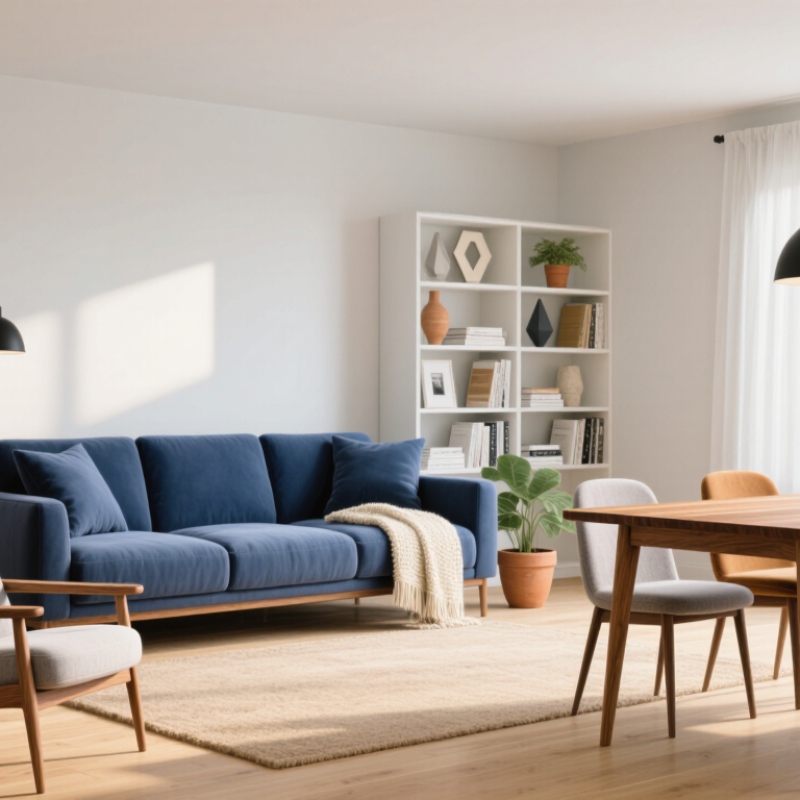
Before choosing a sofa or dining table, measure the room and note the doors, windows, and radiators. A floor plan helps, but mark the furniture’s footprint on the floor with painter’s tape. This makes awkward proportions easier to spot. Keep clear walking routes between doorways and frequently used areas; a beautiful chair is less useful if everyone has to squeeze past it. In a narrow living room, a sofa with raised legs can feel lighter than a deep, solid design. Leave breathing room around large pieces instead of filling every empty corner.
Match furniture to both the room and the people using it. In a small dining area, measure how far chairs pull back before settling on a table size. For a bedroom, check that drawers can open fully and that the bed does not block closet access. Low-profile pieces may help a compact room feel less crowded, while a larger room can handle furniture with more visual weight. Still, tape outlines do not show height or texture, so measurements alone can mislead. Check product dimensions carefully, then compare them with the room from several angles. A slightly smaller piece may look less impressive online, but feel more comfortable every day.
Arrange and Accessorize for a Balanced Look
Arrange furniture around the room’s main activity, such as conversation or reading. Place the sofa and chairs close enough for easy conversation, while keeping a clear route through the space. Aim for about 30 inches of walking room where possible. A rug can connect the seating area; let the front legs of larger pieces rest on it. Balance visual weight, too: pair a substantial sofa with a sturdy side table or a floor lamp.
Accessories add character when they vary in height, texture, and scale. Try a ceramic bowl on a low table, a stack of books, and a taller branch in a nearby vase. Leave some surfaces open. Keep it simple. Too many small objects can make a room feel restless, even when each one is attractive. Repeat one or two colors across cushions, artwork, or a throw to create a gentle link between pieces.
Check the arrangement from the doorway and from your usual seat. A frequent misstep is pushing every item against the walls; pulling a chair inward can make the seating area feel more inviting. Then pause. Live with the layout for a few days before changing it again. If the room still feels uneven, shift one object at a time, such as a lamp or cushion, rather than replacing several pieces at once.
Related Posts
-
Top 10 Home and Furniture Manufacturers from China at the 137th Canton Fair
-
China's Smart Manufacturing Revolution Elevates Best At Home Furniture to Global Bestsellers
-
2026 Top Quality Furniture Trends for Global Buyers?
-
How to Source Home And Furniture in 2026?
-
Challenges in Choosing Best Quality Furniture for Your Home
-
What Defines High Quality Furniture: Key Characteristics to Consider

Catalog
Replacement Cushions
New Jersey Catalog