Best Resin Toilet Brush Holder for 2026?
A Resin Toilet Brush Holder can make a practical bathroom tool feel more considered, but appearance is only part of the decision. For 2026, compare the holder’s footprint, brush fit, ventilation, and ease of cleaning before choosing a finish. A glossy marble effect may look striking beside white tile, while a muted stone texture can suit a smaller, calmer space. Small details matter. Check whether the brush head sits clear of the holder’s base and whether the container can be emptied without awkward handling.
Resin designs vary in weight, surface texture, and construction, so inspect product dimensions and care instructions rather than relying on photographs alone. A stable base helps prevent tipping on smooth flooring, and a removable inner cup can make routine cleaning simpler. Still, decorative resin is not automatically more hygienic or more durable than every alternative. The trade-off is real: a heavier, detailed holder may be harder to move or wipe down. Look for clear material information, a brush that can be replaced, and a shape that leaves enough room around the toilet. No choice is perfect. This guide considers those everyday details alongside style, helping you judge which holder fits your bathroom, cleaning habits, and available space.
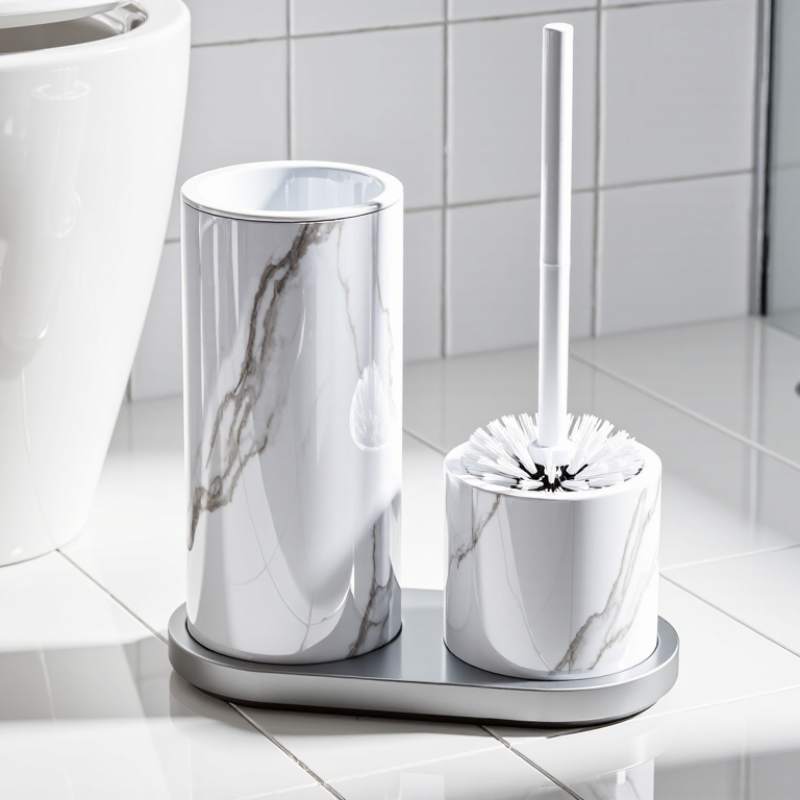
What a Resin Toilet Brush Holder Is and How It Works
A resin toilet brush holder is a molded container that keeps the brush upright and catches drips after use. “Resin” describes a broad family of materials, not one guaranteed formula. Some holders feel rigid and glossy; others are lighter or slightly textured. Check the product’s care instructions, since heat tolerance and cleaning compatibility vary.
Most designs pair a brush cup with a weighted base or a removable inner insert. The cup limits splashes, while an opening or gap can help moisture escape. Small detail, big difference. A fully enclosed holder may hide pooled water, so lift the brush occasionally and inspect the bottom. Rinse away residue, then let the holder dry before replacing the brush. Resin itself should not be assumed to kill germs.
Moisture deserves attention. NSF International’s 2011 household germ study reported yeast or mold on 64% of sampled toothbrush holders. That finding concerns toothbrush holders, not toilet brush holders, so it cannot establish the same rate for this product. Still, it illustrates why damp bathroom containers need regular cleaning. For a 2026 purchase, look for a stable base, a removable cup, and smooth surfaces that are easy to wipe. I would not treat a decorative finish as proof of better hygiene. Cleaning habits matter more than appearance.
Best Resin Toilet Brush Holder for 2026? What It Is and How It Works
How it works: A resin toilet brush holder is a container made from molded resin that keeps a toilet brush upright between uses and catches drips. Rinse the brush after use, let excess water drain, and clean the holder regularly. Resin describes a broad class of materials, so finish, durability, and cleaning instructions vary by product.
About the chart: Suggested intervals between care tasks, in days—not test results or a universal standard. Follow the product maker’s cleaning instructions; clean sooner if needed.
How Resin Materials Affect Durability and Bathroom Use
Best Resin Toilet Brush Holder for 2026?
How Resin Materials Affect Durability and Bathroom Use
“Resin” describes a family of materials, not one guaranteed level of quality. The PlasticsEurope 2024 report, Plastics—the Fast Facts, estimates global plastics production at 413.8 million tonnes in 2023. That figure is broad, not specific to bathroom products, but it shows why a resin label alone says little about a holder’s performance.
Formulation, wall thickness, finish, and manufacturing quality all matter. A dense, smoothly finished holder may resist everyday splashes better than a thin piece with rough seams. Small details matter.
In a bathroom, water often collects beneath the brush or around the holder’s rim. Check for a removable insert, a stable base, and a finish without cracks or pinholes; these features make cleaning easier and reduce trapped moisture.
ASTM D570 provides a method for measuring water absorption in plastics, but results vary by material and test conditions. Ask for product-specific test information rather than assuming every resin is waterproof.
One honest caveat: even a durable holder can develop stains or odors if it stays wet. Let it dry regularly, and inspect the inside where wear is easy to miss.
How to Compare Resin Toilet Brush Holders for 2026
When comparing resin toilet brush holders for 2026, inspect the parts that face daily moisture: the inner cup, rim, seams, and base. A glossy finish can look clean, yet narrow seams may trap residue. Check whether the cup lifts out for washing and whether the brush head can be replaced. Small details matter.
Ask sellers for material and test information, not just “water-resistant” claims. ASTM D570 measures water absorption in plastics, while ASTM D543 evaluates chemical resistance; these methods offer useful benchmarks, though results depend on the exact resin and test conditions.
Stability matters, too. Set the holder on tile and gently press the handle: a narrow, light base may wobble. Measure the space beside your toilet before buying. A few centimeters can decide whether the lid or cabinet door clears it. Ventilation is often overlooked.
Material choice has a wider footprint. PlasticsEurope’s Plastics – the Fast Facts 2023 report estimates global plastics production at 400.3 million tonnes in 2022. That figure does not measure toilet holders specifically, but it supports comparing lifespan, replaceable parts, and packaging—not appearance alone. I would still be cautious about “antimicrobial” claims unless the seller provides independent test details. A pleasant finish is not proof of better hygiene.
How to Clean and Maintain a Resin Toilet Brush Holder
Resin toilet brush holders need regular cleaning, even when the outside looks spotless. Empty trapped water, then wash the holder with warm water and mild dish soap. Use a soft cloth or bottle brush around the base and inner rim, where residue can collect. Rinse well and let it dry fully before replacing the brush. Dry it fully. Avoid scouring pads, boiling water, and strong solvents; they may scratch, warp, or dull some resin finishes. Check the care instructions, since resin formulations differ.
A useful warning comes from NSF International’s 2011 Household Germ Study: among the toothbrush holders tested, 27% contained mold or yeast, and 14% contained staphylococcus. Those figures concern toothbrush holders, not toilet brush holders, so they are a caution about damp bathroom storage—not a direct measurement of toilet brush holders. Clean the holder about weekly, and sooner if you see residue or smell a musty odor. Keep it off pooled water, and allow airflow around the brush. It is easy to focus only on the brush. The holder’s narrow base can quietly stay wet, so inspect it during cleaning. A small drip tray may help, but only if you wash and dry it too.

 Catalog
 Replacement Cushions
 New Jersey Catalog