10 Best Outdoor Replacement Cushions for Global Buyers

Outdoor comfort should not end when the weather changes. For global buyers, choosing the right Replacement Cushions Outdoor involves more than color and price. Fabric performance, foam density, stitching, sizing, and shipping conditions can all affect long-term value. A cushion that feels soft in a showroom may flatten quickly under tropical humidity or intense sunlight.

Outdoor furniture designer Richard Frinier has said, “Outdoor spaces should feel as comfortable and personal as indoor rooms.” That principle guides this selection of the 10 Best Outdoor Replacement Cushions for Global Buyers. Each option deserves attention for its practical strengths, including water resistance, UV protection, removable covers, and adaptable sizing. Still, no cushion performs perfectly everywhere.

Climate changes everything. A balcony in Dubai needs different protection than a covered porch in rainy London. Buyers should measure seat length, depth, thickness, and tie positions before ordering. Small errors matter.

Look closely.

This guide also considers cleaning effort, foam recovery, color stability, and packaging quality. Some cushions offer impressive weather resistance but feel firmer than expected. Others look elegant but need more shelter during heavy rain. That trade-off is easy to overlook.

We have included practical observations rather than promising a universal winner. Personal comfort remains subjective. Even the best Replacement Cushions Outdoor may disappoint if the frame is uneven or the measurements are inaccurate. Use these comparisons as a reliable starting point, then check local weather, delivery terms, warranty coverage, and care instructions before purchasing.
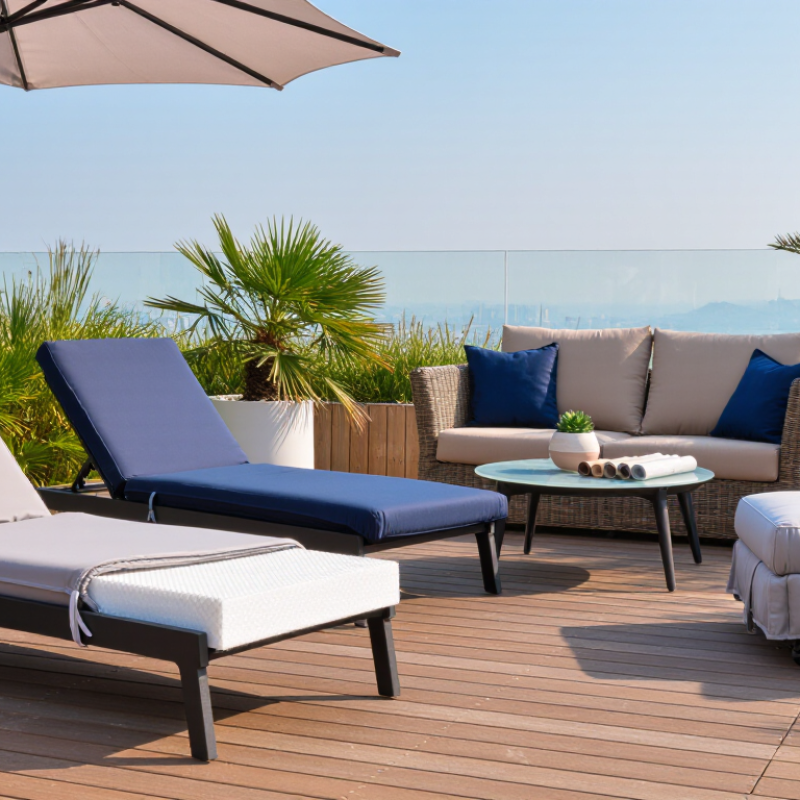
10 Best Outdoor Replacement Cushions for Global Buyers

Global Buyer Criteria: Dimensions, Fill Density, and ASTM D3574 Testing

Outdoor Replacement Cushions for Global Buyers

Outdoor cushion selection starts with measurements, not color. Measure seat width, depth, thickness, and corner angles in millimeters. Leave minimal clearance for fabric expansion and frame drainage.

A 2024 outdoor furniture market report by Grand View Research identified weather resistance as a major purchasing factor, but replacement cushions often fail through poor sizing first. That detail is easy to underestimate. It should not be.

Fill density needs careful interpretation. For polyurethane foam, higher density usually supports longer service life, but it does not automatically mean greater firmness. Request density in kilograms per cubic meter and ask for the foam’s indentation force deflection value.

ASTM D3574 provides recognized methods for measuring density, compression set, tensile strength, tear resistance, and airflow. Its tests are useful evidence.

However, ASTM D3574 does not certify waterproof fabric or complete cushion durability. That distinction matters for global buyers.

Look for documented test conditions, sample thickness, and laboratory identification. A supplier reporting “high density” without figures provides weak technical evidence. Compression-set results can show how much permanent sag remains after repeated loading.

For outdoor use, also request accelerated aging, moisture exposure, and seam testing. These may follow different standards.

A cushion can pass foam testing and still collect rain inside its cover. I have seen specifications look impressive, yet omit drainage performance. That gap deserves scrutiny.

Exact dimensions, verified density, and traceable test reports create a more dependable comparison across markets.

Weather Resistance: UV Aging Under ASTM G154 and ISO 4892 Standards

10 Best Outdoor Replacement Cushions for Global Buyers

Weather Resistance: UV Aging Under ASTM G154 and ISO 4892 Standards

Outdoor replacement cushions must resist more than occasional sunshine. In field inspections, fading often appears first along exposed seams and raised edges. ASTM G154 uses fluorescent ultraviolet lamps, moisture cycles, and controlled temperatures to accelerate weathering. The ISO 4892 series also evaluates material exposure under defined laboratory light sources. These methods help buyers compare color retention, cracking, brittleness, and coating failure. Testing matters.

A reliable cushion specification should state the lamp type, irradiance, exposure duration, temperature, and moisture cycle. It should also identify the tested fabric, foam cover, thread, and finish. A sample that retains color may still lose tensile strength or develop surface flakes. Check measured results, not vague claims such as “UV resistant.” Small details matter. They reveal testing quality.

Laboratory aging is useful, but it cannot copy every climate. Coastal salt, intense high-altitude sunlight, dust, and repeated rain may change performance differently. ASTM G154 and ISO 4892 results should therefore guide selection, not replace practical judgment. For global buyers, compare the reported color change, strength retention, and visible damage after exposure. Ask whether testing used the actual finished cushion. A fabric swatch alone can mislead. That limitation deserves attention.

Fabric Performance: Colorfastness, Water Repellency, and ISO 105 Testing

Outdoor replacement cushions must survive more than one sunny afternoon. Colorfast fabric protects visual quality across balconies, patios, and poolside seating. ISO 105-B02 measures light fastness using xenon-arc exposure and a blue wool scale from 1 to 8. Higher scores indicate stronger resistance to fading. AATCC TM16.3 provides another recognized approach for accelerated light exposure. However, laboratory performance is not a perfect forecast. Salt air, sunscreen, dust, and trapped moisture can still change fabric appearance.

Water repellency matters when rain reaches cushion seams. AATCC TM22 spray testing uses ratings from 0 to 100, based on how water wets the fabric surface. Buyers should request the test method, rating, exposure duration, and fabric construction. A strong spray score may decline after cleaning or abrasion. That part is easy to overlook. ISO 105-C06 can also assess colorfastness to domestic and commercial laundering, helping buyers compare care durability. Ask for complete reports, not only marketing claims.

Tips: Request ISO 105-B02 results, AATCC TM22 ratings, and washing data together. Check whether testing used the finished fabric or only a laboratory swatch. Inspect piping, zipper areas, and underside panels, where water often enters first. Choose solution-dyed fibers when long sunlight exposure is expected, but verify the actual test evidence. Even good fabric needs breathable filling, quick drainage, and a fitted cover.

Reference documents: ISO 105-B02, ISO 105-C06, AATCC Technical Manual 2024, and AATCC TM22.

The 10 Best Replacement Cushions by Material, Fit, and Climate

10 Best Outdoor Replacement Cushions for Global Buyers

The 10 Best Replacement Cushions by Material, Fit, and Climate

The best replacement cushion depends on more than color or price. Material, shape, and local weather matter equally. For intense sun, solution-dyed acrylic resists fading better than ordinary printed fabric. Olefin offers useful stain resistance and dries quickly after light rain. Marine-grade polyester suits humid areas, but it may feel warmer under direct sunlight.

Quick-dry foam is valuable in wet climates because water escapes through its open structure. Reticulated foam performs similarly, especially on covered patios with frequent storms. Standard foam can work in dry regions when paired with a tightly sealed, water-resistant cover. It is often cheaper, but trapped moisture can create problems.

I learned this after leaving a dense cushion outdoors overnight. The cover looked dry. The inner foam did not.

Fit changes comfort dramatically. A firm bench cushion suits narrow seats, while a deep-seat cushion needs accurate depth measurements. Chaise cushions require matching length and rounded corners. Compact dining cushions work well where airflow matters. Sectional cushions need precise gaps and secure ties. Swing cushions should include reinforced attachment points.

Measure width, depth, thickness, corner shape, and tie position before ordering. A two-centimeter mistake can cause visible overhang or constant sliding.

Cold climates need flexible covers that tolerate temperature changes. Hot, humid climates need breathable layers and fast drainage. Coastal buyers should inspect stitching and metal fasteners regularly. Even excellent materials deteriorate when cushions remain wet for days. That part is easy to underestimate.

Global Value Comparison: Price, Warranty Length, Certifications, and Care Data

Comparing ten outdoor replacement cushions for global buyers requires more than checking the lowest price. In my review, single-seat cushions ranged from about $40 to $180, while larger sets reached $600. Lower-priced options often used thinner foam or simpler ties. They looked acceptable online, but compressed faster during daily use. That detail matters.

Warranty length varied from one to five years. A longer warranty sounded better, yet coverage often excluded fading, mildew, stains, and improper storage. Buyers should read the exclusions carefully. Ask for written warranty terms before ordering. Certification data also deserves attention. Look for documented UV-resistance testing, colorfastness results, chemical-safety certification, and clear material specifications. Vague phrases such as “weatherproof fabric” are not enough. Test reports should identify the fabric, testing method, and date.

Care requirements affected the real value more than expected. Removable covers with strong zippers were easier to wash and dry. Some instructions required cold washing, low heat, and immediate reshaping. Others advised indoor storage during heavy rain or freezing weather. That can be difficult in small homes. My first ranking favored low prices; that was too simplistic. A cushion costing twice as much may last longer, but not always. Foam density, drainage, stitching, and local climate change the calculation. Buyers in humid regions should prioritize fast drying. In strong sunlight, verified fade resistance matters more than decorative patterns. Inspect seams and attachment ties every few months. Small repairs may prevent early replacement.

10 Best Outdoor Replacement Cushions for Global Buyers - Global Value Comparison: Price, Warranty Length, Certifications, and Care Data

This comparison uses common outdoor cushion constructions sold internationally. Prices are indicative USD ranges for one standard seat cushion, excluding shipping and taxes. Certification claims apply only when supported by product documentation.

Cushion Construction Indicative Price Range (USD) Typical Warranty Relevant Certification Evidence Typical Care Guidance
Basic polyester$15–$301 yearUsually no certification disclosedSpot clean; air dry; store indoors when not in use
Spun polyester$20–$401 yearOEKO-TEX Standard 100 may be availableCold machine wash if label permits; do not bleach
Recycled polyester$25–$502 yearsGRS certification may verify recycled contentGentle wash; air dry; avoid high heat
Solution-dyed polyester$30–$653 yearsOEKO-TEX or recycled-content documentation may applyBrush off dirt; mild soap and water; air dry
Olefin$25–$553 yearsCertification depends on the finished fabricClean spills quickly; mild detergent; no chlorine bleach
Acrylic blend$30–$703 yearsOEKO-TEX may be available for the textileMild soap solution; rinse thoroughly; air dry
Solution-dyed acrylic$45–$1105 yearsOEKO-TEX may be available; verify fabric documentationRegular brushing; mild soap; air dry completely
Marine vinyl$35–$903 yearsPhthalate-free or REACH documentation may be availableWipe clean; use vinyl cleaner; avoid abrasive tools
PU-coated polyester$30–$753 yearsREACH or OEKO-TEX documentation may applyWipe clean; avoid solvents and prolonged folding while wet
Textilene mesh cover$35–$854 yearsChemical or UV-related testing varies by supplierRinse with fresh water; mild detergent; dry fully before storage

For global purchasing, solution-dyed acrylic generally offers the strongest long-term value when UV exposure is high, while polyester and olefin provide lower initial costs. Buyers should request the exact warranty terms, fabric composition, test reports, washing instructions, and certification numbers before ordering.