7 Best Car Rooftop Tents for Every Budget
A Car Rooftop Tent can turn a parking spot into a simple campsite: unfold the sleeping area, climb a short ladder, and wake above damp ground. That convenience has limits. A tent adds weight and height, and it may affect fuel use, handling, or access to low-clearance parking. Fit matters as much as comfort.
Outdoor Industry Association’s 2024 Outdoor Participation Trends Report estimated that 175.8 million Americans took part in outdoor recreation in 2023. That broad participation figure does not measure rooftop-tent ownership, but it shows why flexible camping gear attracts interest. For shoppers, the practical questions are more specific: Does the tent fit the vehicle and its roof-rack system? Can one person open it? Will the mattress, insulation, and weather protection suit the trips planned?
This guide compares seven rooftop tents across different budgets, from basic soft-shell designs to premium hard-shell models. We’ll weigh setup time, sleeping capacity, packed size, materials, and warranty details, while distinguishing manufacturer specifications from real-world considerations. Always check your vehicle and rack makers’ load limits before buying; a tent’s advertised capacity alone is not enough. The awkward part? A costly tent can still be the wrong match. Choose for your car, your climate, and the nights you actually expect to spend outside.
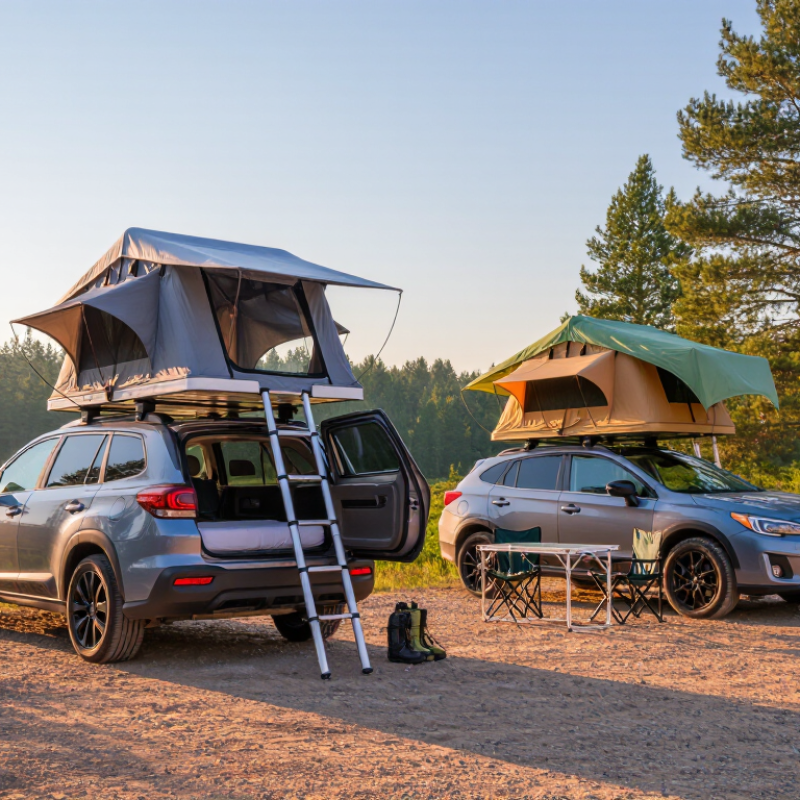
How Car Rooftop Tents Work and What Sets Them Apart
A rooftop tent mounts to a vehicle’s roof rack and folds open to create an elevated sleeping space. On the road, it stays secured in a compact position; at camp, hinges or telescoping supports open the sleeping platform. A ladder provides access, while the vehicle carries the tent and occupants’ weight. That distinction matters. Check both the rack’s rated capacity and the vehicle’s roof-load guidance before choosing a tent. Driving limits can differ from parked limits, so don’t assume one number covers both. Load labels deserve a close look.
Designs vary by setup and construction. Hard-shell models often open quickly and protect their contents when closed, but can cost more and add height. Soft-shell models may offer a larger sleeping area for the price, though folding and covering them can take more effort. Neither type suits every trip. Wind, rain, and uneven ground affect comfort, and an elevated bed can feel less stable than expected. I’d compare packed dimensions, mattress size, and setup steps—not just sleeping capacity. Small details matter. A cold ladder at dawn is easy to overlook when shopping.
Which Features Matter Most Across Different Price Ranges
Price changes which features deserve attention. At the entry level, check the mounting system, mattress thickness, and fabric seams before paying for extras. A tent that fits your vehicle securely matters more than a long feature list. Basic models may take longer to open, and that gets old in the rain.
In the middle price range, look for easier setup, better ventilation, and a sturdier ladder. These features can make a real difference after a long drive. Higher-priced tents may offer a rigid shell, quicker opening, or more weather-resistant materials. Yet a costly shell is not automatically the best choice; added weight can affect handling and fuel use. Check your vehicle’s roof-load limits and the tent’s installed weight, not just its sleeping capacity.
Tips: Set up the tent at home before a trip. Check that the ladder reaches firm ground, and test the mattress for comfort. Compare packed dimensions, too. A bulky tent can crowd a garage or sit awkwardly on smaller vehicles. Small detail, big annoyance. Read care instructions and warranty terms carefully; fabric and hardware still need attention, whatever the price. If possible, inspect the hinges and mounting points in person. A little wobble is worth questioning.
Seven Rooftop Tents for Different Budgets and Needs
Seven rooftop tents can serve very different budgets and travel styles. An entry-level soft-shell tent keeps the purchase price lower, but takes longer to unfold. A compact soft-shell suits solo travelers with limited roof space. Couples may prefer a wider soft-shell with room for bedding. These are practical trade-offs, not guarantees of comfort. Check your vehicle’s roof-load limits and the tent maker’s installation guidance before buying.
For quicker setup, a budget hard-shell opens rapidly but usually costs more. A lightweight hard-shell may suit frequent drivers who want less roof weight. Families can look for a wider hard-shell with a larger sleeping area. An insulated model may help in colder conditions, though it adds weight and expense. The Outdoor Industry Association’s 2024 Outdoor Participation Trends Report counted 175.8 million U.S. outdoor recreation participants in 2023. That signals broad interest in outdoor trips, not rooftop-tent sales. Fit matters more than features. Measure the roof, account for crossbars and gear, and compare packed height before choosing. I would not treat any shortlist as universal; setup effort and usable space can feel different on the ground.
How to Match a Rooftop Tent to Your Vehicle
How to Match a Rooftop Tent to Your Vehicle
Start with the vehicle’s roof-load limit, not the tent’s sleeping capacity. Your owner’s manual should specify the maximum load while driving. Add the tent, rack, and mounting hardware together; their combined weight must stay within that limit. A parked vehicle may support a different static load, so don’t treat the two limits as interchangeable. Small details matter. Check that the rack fits your roof type and that its crossbars match the tent’s mounting system. A few centimeters of mismatch can make installation awkward.
Vehicle shape matters, too. Measure the roof before buying, and check whether the open tent will block a hatch, antenna, or sunroof. Taller vehicles can make access harder, especially on uneven ground. There is no perfect shortcut here: published fit guides help, but your vehicle manual and rack instructions are the final checks. The U.S. Department of Energy’s FuelEconomy.gov reports that roof-top cargo boxes can lower fuel economy by 2%–8% in city driving and 6%–17% on highways. A tent is not a cargo box, but added roof drag is worth considering.
Tips: Weigh every component, including the rack. Then confirm the total against the manual’s driving limit. Test the hatch and tent clearance at home, before a trip. Recheck fasteners after the first short drive.
What to Know About Setup, Safety, and Maintenance
A rooftop tent’s setup begins before the campsite. Check your vehicle manual for its moving roof-load limit, then include the rack and tent in your calculation. The parked, or static, limit is not the driving limit. Fit the rack on a level surface and tighten hardware to the specified torque. Test the ladder on firm ground. Small details matter.
Wind and uneven ground deserve attention. NHTSA’s 2022 traffic-safety data recorded 10,597 fatalities in rollover crashes; that figure is not specific to rooftop tents, but it underlines why careful loading matters. Keep heavy gear low inside the vehicle, secure loose items, and never drive with the tent open. A roof tent can also change how a vehicle feels in crosswinds. Take it slowly. I’d still recheck every fastener after the first short drive; people can miss one.
Tips: Let the tent dry fully before storage, even if that means opening it again at home. Brush off grit, check seams and mounting points, and replace worn straps. A quick inspection is easy to skip when you’re tired. Don’t.

 Catalog
 Replacement Cushions
 New Jersey Catalog