What Are the 7 Best Wholesale Home Theater Seats?
Choosing the right Wholesale Home Theater Seats means balancing comfort, durability, and the realities of a room. A plush showroom sample may feel inviting, but its frame, upholstery, and reclining mechanism matter more after years of use. For buyers comparing seven leading options, the useful question is not simply which seat looks best. It is which model fits the audience, space, and budget without sacrificing daily comfort.
Ergonomics researcher Dr. Alan Hedge has summed up the value of thoughtful design with this line: “Good ergonomics is good economics.” That principle is relevant to theater seating: supportive cushions and accessible controls can make long viewing sessions more comfortable. Details count. Check seat width, recline clearance, cupholder placement, and upholstery specifications before ordering. Ask suppliers about samples, warranty coverage, replacement parts, and minimum quantities; wholesale pricing alone does not reveal the full cost. A narrow aisle or a low ceiling can turn a popular recliner into a poor fit. Comfort matters.
The seven choices in this guide are starting points, not universal winners. Specifications can vary by supplier, and product claims deserve a closer look. A seat that suits a busy commercial lounge may feel oversized in a small media room. Weigh the details against your actual layout, then confirm dimensions and availability directly with the seller.
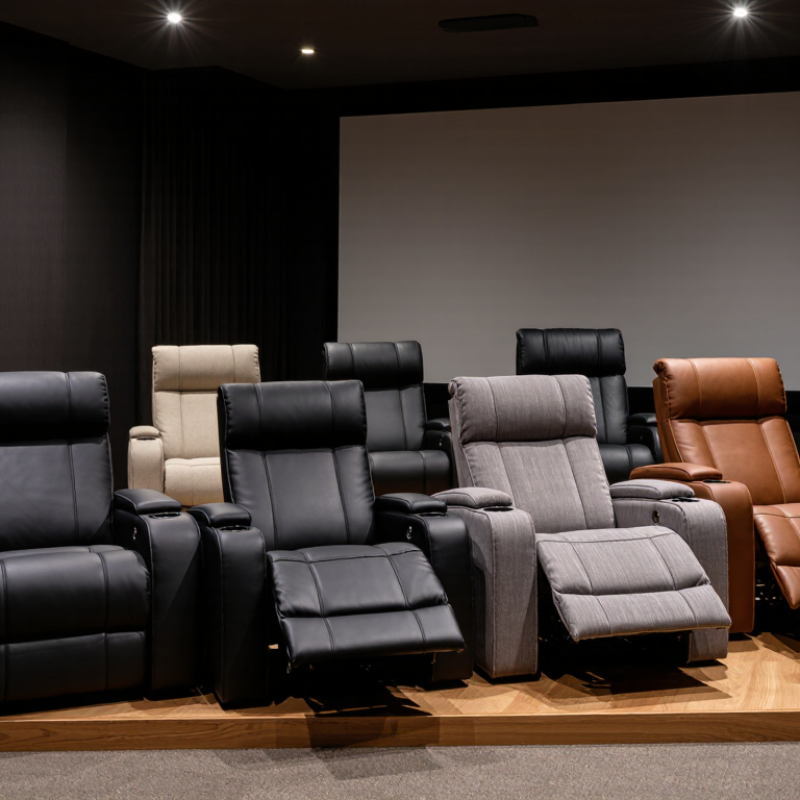
What Wholesale Home Theater Seats Are and Who They Serve
Wholesale home theater seats are seating units bought in larger quantities, usually for resale or multi-room projects. They may arrive as individual chairs or connected rows, with options for reclining backs, cup holders, and power outlets. The key difference is purchasing scale, not a special seat category. Buyers should confirm dimensions, upholstery, assembly needs, and replacement-part availability before placing a bulk order.
These seats can serve furniture retailers, home theater installers, property developers, and operators furnishing several screening rooms. A retailer may need dependable stock in varied configurations. An installer may prioritize measurements, delivery timing, and straightforward assembly. Developers often care about consistent finishes across multiple rooms. Small venues may value durable upholstery and easy cleaning. Needs vary. A feature that suits a private media room may be unnecessary in a shared space.
The numbers on a product sheet do not tell the whole story. Measure doorways and stair turns, not just the room footprint; a wide chair can be difficult to move indoors. Ask how warranties and freight damage are handled, and request fabric samples when possible. It is tempting to choose the lowest unit price, but that can overlook shipping, setup, or mismatched replacement pieces. Bulk buying is not automatically cheaper.
What Are the 7 Best Wholesale Home Theater Seats? - What Wholesale Home Theater Seats Are and Who They Serve
Wholesale home theater seats are seating products purchased in larger quantities, often for resale or for furnishing venues and residential projects. The options below compare common seat types; dimensions are indicative per-seat ranges and can vary by model and configuration.
| Seat Type | Typical Overall Width per Seat | Main Features | Best Suited For | Wholesale Buying Consideration |
| Manual Recliner | About 30–36 in (76–91 cm) | Reclines using a lever or push-back mechanism; no power connection required. | Budget-conscious home theaters, rental properties, and buyers seeking straightforward seating. | Check the recline mechanism, upholstery options, carton dimensions, and replacement-part availability. |
| Power Recliner | About 32–38 in (81–97 cm) | Electric reclining controls; some models include powered headrests or USB charging. | Residential theater projects and customers prioritizing adjustable comfort. | Confirm electrical requirements, control placement, warranty coverage, and whether accessories are included. |
| Wall-Hugger Recliner | About 30–36 in (76–91 cm) | Designed to recline with less clearance behind the seat than many conventional recliners. | Smaller rooms or rows positioned near a wall. | Compare the specified minimum wall clearance and fully reclined footprint; “wall-hugger” requirements vary by model. |
| Loveseat or Joined Pair | About 60–76 in (152–193 cm) for two seats | Two seats share a frame or are designed to connect; center consoles may be available. | Couples, family rooms, and projects needing a tidy two-seat row. | Verify total assembled width, console configuration, and whether the seats can be separated or reconfigured. |
| Commercial Fixed Auditorium Seat | About 20–24 in (51–61 cm) | Typically uses a fixed row layout and a folding or tip-up seat to help maintain aisle clearance. | Private screening rooms, community venues, and other high-capacity spaces. | Review row spacing, aisle access, anchoring needs, fire-code requirements, and local accessibility rules. |
| Rocking Recliner | About 30–37 in (76–94 cm) | Combines a rocking motion in the upright position with a reclining function. | Casual media rooms and buyers who want flexible everyday seating. | Check movement clearance, frame construction, and whether rocking is available in all seat positions. |
| Modular Theater Sectional | About 30–40 in (76–102 cm) per seat module | Individual modules can often be arranged in straight or corner configurations; features vary by module. | Larger family rooms and projects with non-standard layouts. | Confirm module compatibility, total layout dimensions, connector hardware, and delivery access before ordering. |
Dimensions are general planning estimates, not guaranteed specifications. Before placing a bulk order, request current product drawings, packed dimensions, material details, minimum-order terms, and delivery information from the supplier.
How to Evaluate Wholesale Home Theater Seating
Wholesale evaluation starts with the room, not the catalog. Measure seat width, fully reclined depth, aisle clearance, and doorway access. One inch matters. Ask for dimensioned drawings and confirm whether measurements include arms and footrests. The Consumer Technology Association’s 2024 industry forecast projected $512 billion in U.S. consumer technology retail revenue. That figure signals a large entertainment market, not proof that any seat will perform well. Treat it as context, then judge each specification against your installation.
Check frame construction, recline mechanism, warranty terms, replacement-part availability, and upholstery test results. The Association for Contract Textiles identifies standardized abrasion testing, including Wyzenbeek and Martindale methods, as useful for comparing fabrics. Ask which method produced the quoted result; numbers from different tests are not directly interchangeable. Also request a sample and inspect seams, stitching, and surface feel under room lighting. A dense fabric can still feel too warm. I would not choose on abrasion figures alone; comfort and service access matter, and wholesale quotes sometimes leave those details vague. Ask for written confirmation before ordering.
Seven Top Wholesale Home Theater Seat Styles
Wholesale Home Theater Seating comes in styles that solve different room problems. Classic manual recliners keep controls simple and may suit buyers watching costs. Power recliners offer smoother adjustment, but outlets and cord routes need planning. Wall-hugger seats can recline close to a wall, useful in narrow rows. Still, check the required clearance on the actual product specifications. A loveseat with a center console adds cupholders and storage for a shared seat. Small rooms matter.
Theater sofas create a more connected row, with fewer gaps between seats. Chaise-style loungers extend leg support, though their longer shape can reduce walkway space. Modular sectionals let buyers combine seat units around corners or fit unusual layouts. Flexible, but not magic. Before ordering wholesale, compare seat width, reclined depth, upholstery samples, and carton dimensions. A fabric that looks durable online may feel warmer or rougher in person.
Ask suppliers how they inspect stitching, frames, and reclining mechanisms, and request written details on warranty coverage and replacement parts. Measure doorways and stairs, not just the room. That step is easy to overlook. I would avoid choosing by price per seat alone; packaging, assembly needs, and service access affect the real cost. A small test order can reveal fit or comfort issues, though it may not represent every production batch.
How the Seven Seat Styles Compare in Comfort, Features, and Cost
Wholesale theater seating ranges from simple, budget-friendly chairs to feature-rich power models. Standard recliners offer padded arms and manual footrests at a lower cost, though their upholstery and cushioning vary. Wall-hugger seats need less space behind them, making them practical for compact rooms. Power recliners add smooth adjustment and sometimes USB ports, but motors raise the price and may need maintenance. Loveseats create a shared seating area; they feel cozy, but personal space can be limited.
Row seats keep a theater layout tidy and may include shared armrests or cupholders. Rocker recliners provide gentle movement and often cost less than powered options, though movement may distract some viewers. Zero-gravity styles elevate the legs for a more weightless feel, but their bulk and higher price are not right for every room. In general, manual and rocker models are more affordable, while powered and specialized seats cost more. Wholesale pricing can reduce per-seat costs, but fabric, frame construction, warranties, and order quantity affect the final quote. One trade-off is easy to miss: a lower price may mean firmer cushions or fewer adjustments.
Tips: Measure seat width, room depth, and recline clearance before ordering. Ask for fabric samples, check the weight capacity, and test the recline if possible. Comfort is personal. A chair that feels perfect for ten minutes may feel different during a long film.
How to Choose and Order Wholesale Home Theater Seats
Choosing wholesale home theater seats starts with the room, not the catalog. Measure each row, aisle, doorway, and the distance from the screen. Reclining seats need extra clearance behind them. Measure twice. A paper floor plan can reveal a cramped walkway before a large order arrives.
Compare seat width, frame construction, upholstery, reclining mechanism, and available replacement parts. Ask for fabric or material swatches; colors can look different under dim theater lighting. Ask for swatches. Request a sample seat when the order is substantial, and test the controls, stitching, and armrest storage yourself. A polished photo is not a durability test.
Before ordering, get a written quote that lists unit price, minimum quantity, packaging, delivery terms, lead time, and warranty coverage. Confirm whether the price includes freight and whether cartons fit through your building’s entrance. Request product specifications and inspect a delivered sample for loose seams or uneven movement. One imperfect detail matters. It may be minor, but repeated across a full row, it becomes hard to ignore. Agree on a process for damaged cartons and missing components, then keep the approved specifications with your purchase records.
What Are the 7 Best Wholesale Home Theater Seats? How to Choose and Order
Planning example: The chart estimates how many 30-inch-wide seat modules fit in a row while reserving 24 inches at each end. Capacity is calculated as the whole number of seat modules that fit in the remaining width. Actual fit depends on the seats’ dimensions, recline clearance, and applicable aisle and egress requirements—confirm these details with your supplier before ordering.

 Catalog
 Replacement Cushions
 New Jersey Catalog